AI-ROI voor het MKB: een realistische manier om de cijfers te berekenen
Leveranciers noemen ROI-cijfers die horen bij bedrijven tien keer zo groot als het uwe. Dit is de rustige, eerlijke versie voor de rest van ons — hoe u inschat wat AI uw bedrijf echt waard is, voordat u er een cent aan uitgeeft.
 Have a nice day13 min. leestijd
Elke AI-salespitch heeft dezelfde slide. Een groot getal — 300% ROI, tien uur per week bespaard, een grafiek die als een hockeystick richting de hemel wijst. Het is overtuigend, en het is bijna altijd geleend van een bedrijf dat in niets op het uwe lijkt. Als u een bedrijf runt met een handvol mensen en een echt budget waarvoor u zich moet verantwoorden, is die slide geen belofte. Het is een gevoel. Dit stuk gaat erover dat gevoel te vervangen door een getal dat u daadwerkelijk kunt verdedigen.
Ik heb tegenover heel wat ondernemers gezeten die moesten beslissen of AI de moeite waard is. Het eerlijke antwoord is: soms spectaculair, soms helemaal niet — en het verschil heeft bijna niets met de technologie te maken. Het komt erop neer of de rekensom klopt voor uw bedrijf, op uw volumes, tegen uw uurkosten. Niemand kan u dat getal aanreiken. Maar iedereen kan het in een middag leren berekenen, en dat is precies wat we hier gaan doen.
Geen buzzwords, geen opgeblazen praktijkvoorbeelden, geen doen alsof AI gratis is zodra u ervoor betaald hebt. Gewoon een werkbare methode om het rendement in te schatten voordat u zich vastlegt, een uitgewerkt voorbeeld dat u kunt overnemen, en een eerlijke lijst van de kosten die iedereen vergeet op te schrijven.
Wat ROI echt betekent als u klein bent
ROI — rendement op investering — is een eenvoudig idee in een intimiderend pak. Het is gewoon de waarde die u terugkrijgt gedeeld door wat u erin steekt, meestal uitgedrukt als percentage of terugverdientijd. Geef € 5.000 uit, bespaar € 15.000 over een jaar, en u hebt uw geld verdrievoudigd. Het rekenwerk is triviaal. Het lastige deel, en het deel dat leveranciers wegmoffelen, is eerlijk zijn over beide helften van die breuk.
Voor een groot bedrijf is ROI een portfoliospel — ze kunnen zich een paar missers veroorloven omdat één grote winst alles dekt. U kunt dat niet. Als u klein bent, kost één verkeerde AI-gok niet alleen geld, maar ontneemt het u twee jaar lang de moed om het opnieuw te proberen. Dus uw lat ligt anders. U jaagt niet op het hoogste theoretische rendement. U jaagt op het meest zekere — het project waarbij u vóór de start ongeveer kunt zien waar het geld vandaan komt.
“Als u klein bent, is het doel niet het hoogst mogelijke rendement. Het is het rendement waar u écht zeker van kunt zijn voordat u een cent uitgeeft.”
Die herformulering is belangrijk, want ze bepaalt naar welke projecten u überhaupt kijkt. Een flashy AI-marketingtool kan meer omzet beloven, maar het rendement is vaag en hangt af van een dozijn dingen buiten uw controle. Een AI-assistent die uw repetitieve telefonische vragen afhandelt, bespaart een aantal uur dat u bijna op de kalender kunt aftellen. Beide kunnen een goede ROI op een slide hebben. Slechts één ervan is een getal waar u achter kunt staan.
De twee helften van de breuk die niemand goed optelt
De meeste ROI-schattingen vallen op dezelfde twee plekken uit elkaar. De 'rendement'-kant wordt opgeblazen door optimisme, en de 'investering'-kant wordt verkleind door alles wat mensen vergeten mee te tellen. Laten we beide rechtzetten, te beginnen met het rendement — want daar huist het wensdenken.
Het rendement tellen zonder uzelf voor de gek te houden
Er zijn eigenlijk maar drie eerlijke bronnen van rendement voor een klein bedrijf, en het helpt om te weten welke u claimt. Bespaarde tijd zijn uren die uw team niet meer aan een taak besteedt en die u kunt waarderen tegen een realistische uurprijs. Teruggewonnen omzet is geld dat weglekte — het gemiste telefoontje dat elders boekte, de offerte die niemand opvolgde. Vermeden fouten zijn de kosten van vergissingen die niet meer gebeuren: de dubbele boeking, de verkeerde factuur, de order die twee keer werd ingetypt.
Bespaarde tijd is het makkelijkst om eerlijk over te zijn, dus begin daar. Maar pas op voor de valkuil erin: iemand twintig minuten per dag besparen is alleen echt geld als die minuten met iets waardevols worden gevuld, of als het een aanwerving overbodig maakt. Twintig minuten dun verspreid over een dag verdampt meestal gewoon. De besparingen die tellen, zijn die welke een hele rol vrijmaken, een aanwerving voorkomen, of u toelaten meer werk aan te nemen zonder extra personeel.
De investering tellen, inclusief de delen die leveranciers weglaten
Nu de andere helft — en hier sjoemelt de slide altijd. De prijs die u krijgt, is zelden de prijs die u betaalt. Een realistisch investeringscijfer moet de delen bevatten die niet op de factuur staan: de tijd die uw eigen mensen besteden aan opzetten en de tool leren kennen, het opschonen van data waar niemand u voor waarschuwde, de doorlopende abonnements- of gebruikskosten, en het onderhoud wanneer er onvermijdelijk iets bijgesteld moet worden.
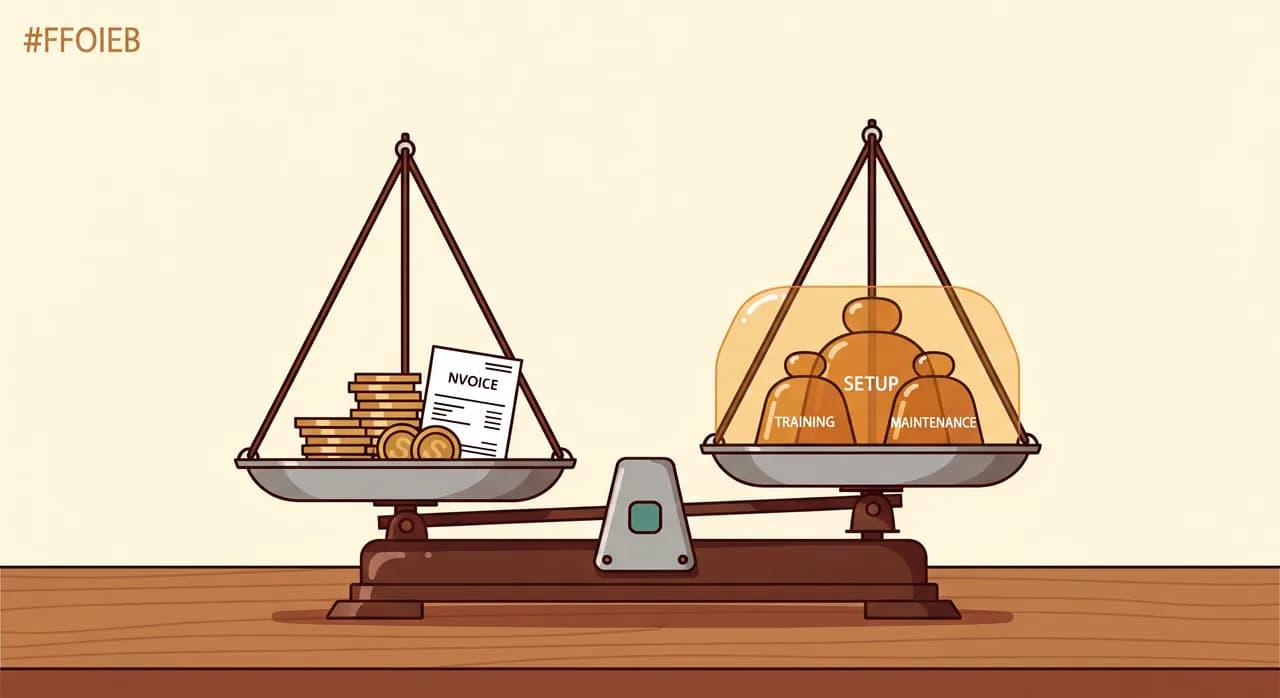
Gebruiksgebaseerde prijzen verdienen extra wantrouwen. Veel AI-tools rekenen per bericht, per minuut, per document of per 'credit'. Bij een demo met drie testvragen lijkt het niets. Op uw echte volume in een drukke maand kan het een veelvoud van het kopcijfer zijn. Neem voordat u zich vastlegt uw werkelijke maandvolume — telefoontjes, e-mails, documenten, wat het ook is — en haal dat door de prijsstelling. Verrassingen hier zijn de meest voorkomende reden dat een mooi ogende ROI negatief uitpakt.
Een uitgewerkt voorbeeld dat u kunt overnemen
Cijfers maken dit concreet, dus hier een realistisch — en bewust illustratief — voorbeeld. Stel u een kleine tandartspraktijk met twee locaties voor. De balie krijgt een constante stroom routinegesprekken: openingstijden, 'kan ik mijn afspraak verzetten', 'accepteert u deze verzekering'. Het team schat dat het ongeveer twee uur personeelstijd per dag opslokt over de hele praktijk, en erger nog, gesprekken blijven onbeantwoord tijdens drukke periodes — waarvan sommige mensen waren die wilden boeken.
Ze bekijken een AI-telefoonassistent die de routinevragen afhandelt en afspraken boekt of verzet, en alles wat ongebruikelijk is doorgeeft aan een mens. Laten we de som op de eerlijke manier maken, beide helften.
| Regel | Bedrag (per jaar) | Toelichting |
|---|---|---|
| Bespaarde tijd: ~2 uur/dag hergebruikt | ≈ € 14.000 | Gewaardeerd tegen een realistische volledige uurprijs, alleen echt hergebruikte uren geteld |
| Teruggewonnen omzet: gemiste boekingen | ≈ € 9.000 | Een voorzichtig deel van eerder onbeantwoorde gesprekken die elders boekten |
| — Totaal geschat rendement | ≈ € 23.000 | Tel de twee eerlijke bronnen van waarde op |
| Installatie, configuratie, training | − € 3.500 | Eenmalig, inclusief de eigen tijd van het team |
| Abonnement + gebruik op echt volume | − € 6.000 | Getoetst aan werkelijke maandelijkse beltallen, niet de demo |
| Onderhoud en aanpassingen | − € 1.500 | De realistische 'er moet wat bijgesteld worden'-regel |
| — Totale investering (jaar één) | − € 11.000 | Alles, niet alleen de factuur |
| Netto rendement (jaar één) | ≈ € 12.000 | Terugverdiend in ongeveer vijf tot zes maanden |
Let op wat dit geloofwaardig maakt. Het rendement is geen fantasie-multiplier — het zijn twee specifieke, telbare bronnen. De investering omvat de eigen installatietijd van het team en een gebruikscijfer getoetst aan het echte belvolume, niet de drie vragen uit de demo. En de kop is niet '300% ROI' — het is een terugverdientijd van vijf tot zes maanden, wat veel nuttiger is om te weten. Als diezelfde cijfers een terugverdientijd van twee jaar gaven, zou u veel harder nadenken, en terecht.
Waar AI-ROI vaak echt is — en waar het meestal een luchtspiegeling is
Na genoeg van deze berekeningen tekenen zich patronen af. Sommige AI-projecten verdienen zich in een klein bedrijf betrouwbaar terug; andere zien er op papier geweldig uit en stellen in de praktijk teleur. Het is de moeite waard te weten in welk kamp u stapt voordat u begint.
De betrouwbare winnaars hebben een gemeenschappelijke vorm: een taak met hoog volume, repetitief en taalgericht waarbij u nu een persoon betaalt voor iets wat een model goed doet. Routinematige klantvragen. Facturen lezen en de cijfers eruit halen. Een drukke inbox triëren en antwoorden opstellen. De aanvragen opvangen die u nu mist. Het rendement is echt omdat de kosten die u vervangt echt en meetbaar zijn.
- Routinematige telefoon- en chatvragen afhandelen die uw team de hele dag onderbreken.
- Gegevens uit facturen, formulieren en e-mails halen in plaats van ze opnieuw in te typen.
- Eerste-versie-antwoorden opstellen op repetitieve berichten, klaar voor goedkeuring door een mens.
- Een hoog volume documenten of supporttickets sorteren en doorsturen.
- Aanvragen terugwinnen die u nu buiten werktijd mist.
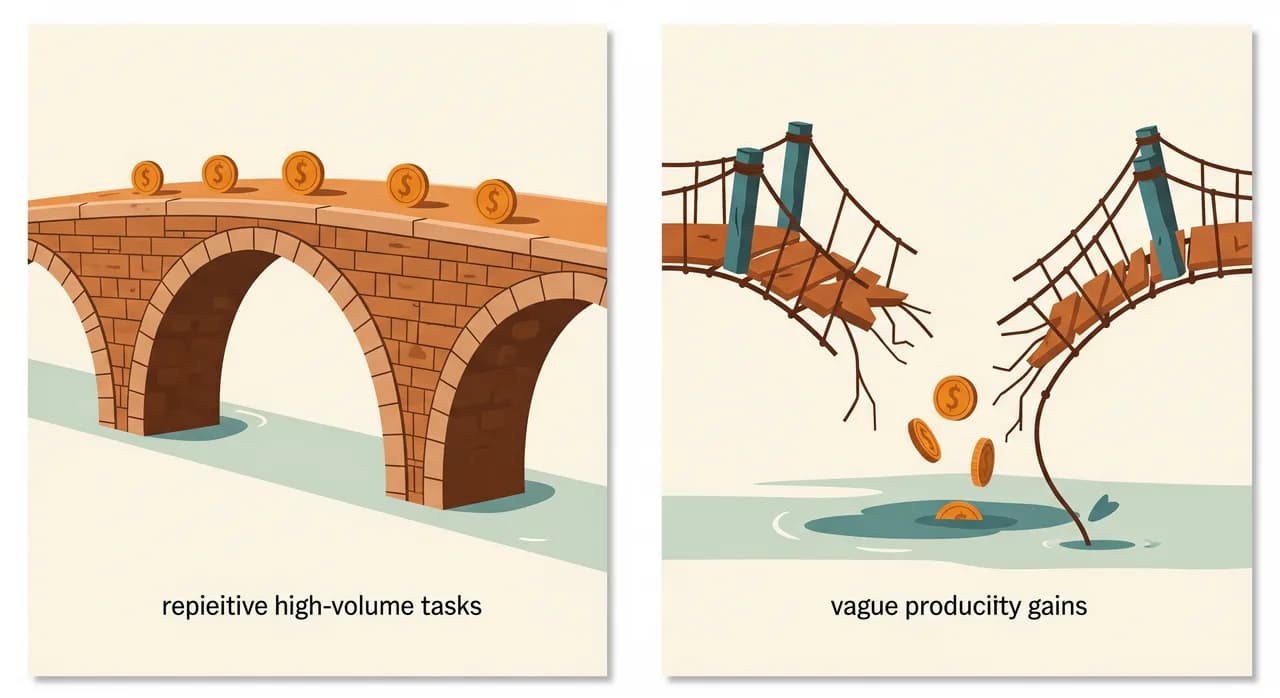
De luchtspiegelingen hebben ook een gemeenschappelijke vorm. Ze beloven diffuse 'productiviteit' of 'betere beslissingen' — rendementen die echt moeilijk te meten en nog moeilijker toe te schrijven zijn. Een AI-tool die iedereen '10% productiever' maakt, klinkt prachtig en is bijna onmogelijk te verzilveren, want die 10% verschijnt nooit als een getal waar u naar kunt wijzen. Misschien is het toch de moeite waard. Maar verkleed een vaag voordeel niet als een harde ROI, want als u het over zes maanden evalueert, kunt u niet bewijzen dat het zichzelf heeft terugverdiend.
De geldvalkuilen die het rendement stilletjes ruïneren
Zelfs een project met echt goede cijfers kan onder water raken als u in een van de gebruikelijke valkuilen loopt. Geen van deze is exotisch — het zijn gewoon de dingen die niet netjes op de ROI-slide passen, en juist daarom worden ze weggelaten.
- 1Het platform kopen vóór het probleemEen alles-in-één AI-suite om één specifieke taak op te lossen, betekent dat u voor honderd functies betaalt om er drie te gebruiken. Baken eerst het probleem af, koop dan het kleinste ding dat het oplost.
- 2Gebruiksgebaseerde prijzen op schaal negerenPrijs per bericht of per minuut is goedkoop bij demovolume en meedogenloos bij echt volume. Modelleer altijd uw werkelijke maandcijfers voordat u tekent.
- 3De menselijke kosten van installatie vergetenDe tijd van uw team om de tool te configureren, te testen en te leren is echt geld. Laat het van de pagina af en uw terugverdientijd is fictie.
- 4De vraag 'wie is hier eigenaar van' overslaanEen AI-tool zonder eigenaar raakt verouderd, verliest vertrouwen en wordt stilletjes verlaten — terwijl het abonnement gewoon blijft lopen. Wijs vanaf dag één een eigenaar aan.
Een korte checklist voordat u zich vastlegt
Voordat u iets tekent, haal het project door een paar nuchtere vragen. Als u ze allemaal met een stalen gezicht kunt beantwoorden, is de rekensom waarschijnlijk gezond. Als u op twee of meer struikelt, is de ROI meer hoop dan berekening — en is het de moeite waard om te vertragen.
- Kan ik de specifieke taak benoemen die dit vervangt, en ongeveer hoe vaak die voorkomt?
- Bestaat mijn 'rendement' uit telbare uren of terugwinbare omzet — niet uit vage productiviteit?
- Heb ik het gebruik geprijsd tegen mijn echte maandvolume, niet de demo?
- Heb ik de installatie- en leertijd van mijn eigen team aan de investering toegevoegd?
- Is de terugverdientijd onder een jaar? Zo niet, ben ik helder over waarom ik het toch zou doen?
- Heb ik één persoon aangewezen die hier eigenaar van is nadat het live gaat?

Er gaat een stil zelfvertrouwen uit van het zelf doen. U bent niet langer overgeleverd aan de grafiek van een ander en begint projecten te beoordelen op cijfers die u zelf hebt opgebouwd. Sommige AI-projecten zeilen door deze checklist en verdienen zich sneller terug dan u zou verwachten. Andere vallen erop af — en dat 'nee' is net zo waardevol, want het is het geld dat u niet verspild hebt.
Wilt u een eerlijk antwoord of AI voor u rendeert?
Breng ons de taak waar u over nadenkt, en we maken de eerlijke som samen met u — rendement, verborgen kosten, terugverdientijd — voordat iemand iets bouwt. Als de cijfers niet kloppen, zeggen we het u.
Bespreek uw AI-businesscaseVeelgestelde vragen
Is AI echt de moeite waard voor een klein bedrijf?
Hoe bereken ik de ROI van een AI-tool?
Wat is een goede terugverdientijd voor AI in een klein bedrijf?
Welke verborgen kosten laten AI-leveranciers weg?
Moet ik wachten tot AI goedkoper wordt voordat ik investeer?

Have a nice day is een softwarestudio die kleine en middelgrote bedrijven helpt digitaliseren — automatisering, AI en maatwerksoftware die werkt in de dagelijkse praktijk, niet alleen op slides.