Automation vs Hiring: When Software Beats a New Role
Every growing small business hits the same wall: the work no longer fits the people. The instinct is to hire. Sometimes that's right — and sometimes it quietly locks in a salary to do a job a script could finish before lunch.
 Have a nice day14 min read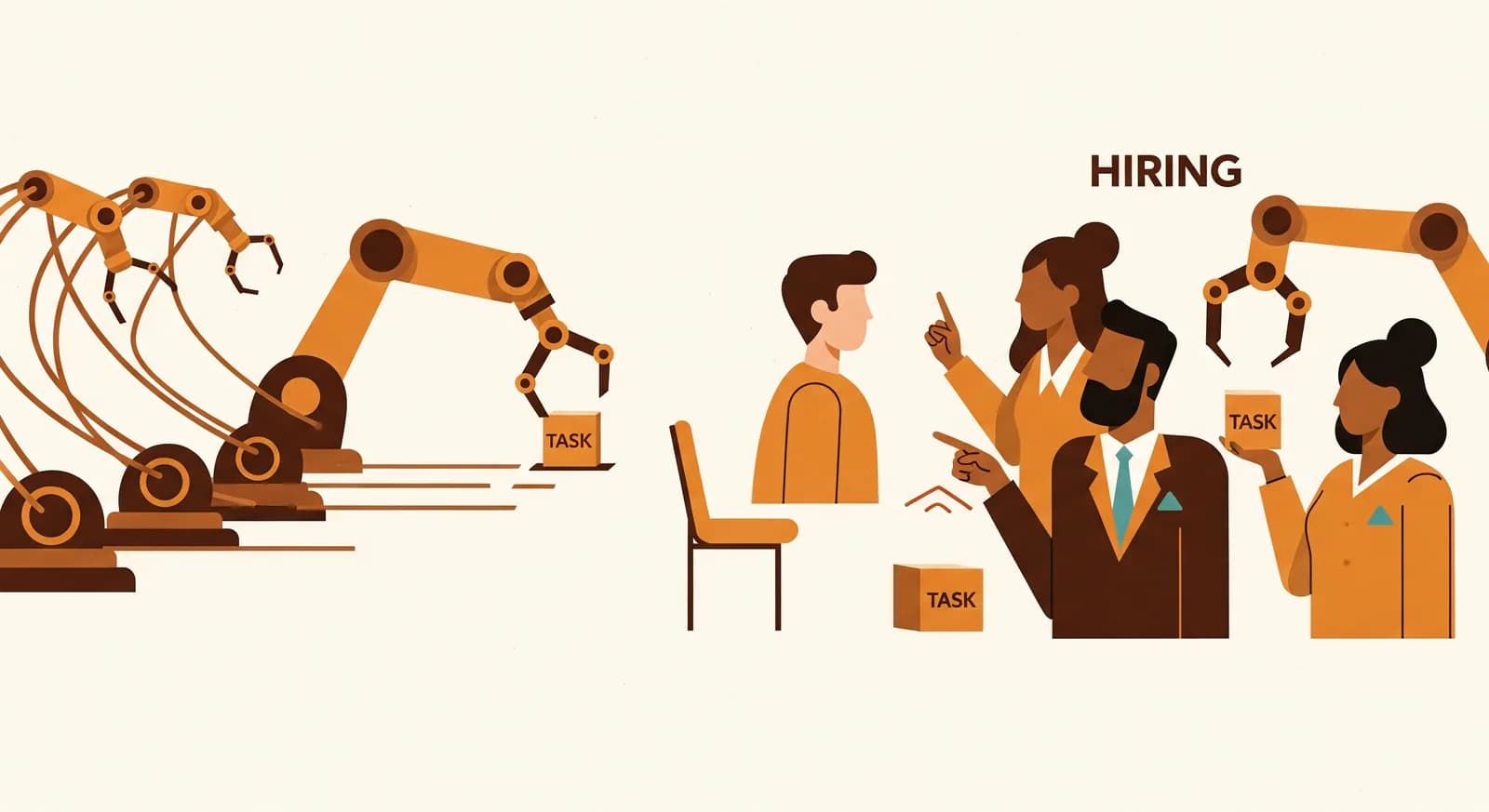
There's a moment that arrives in almost every small business that's working. The orders are coming, the calendar is full, and the team is visibly underwater. Someone — usually you — is staying late to keep the wheels on. And the obvious answer, the one everyone reaches for first, is: we need to hire someone. Sometimes that's exactly right. And sometimes it's the most expensive way to solve a problem that didn't need a person at all.
I've watched this decision play out dozens of times, from the inside, with owners who were genuinely smart about their trade and genuinely lost about this one call. The pull toward hiring is strong because it feels like growth. A new face, a new desk, more hands. But a new hire is the single biggest recurring cost most small businesses ever take on — and unlike a tool, you can't pause a salary when things go quiet.
So this is a guide to the question underneath the panic: does this problem actually need another human, or does it need the boring work taken off your humans? The honest answer is usually a bit of both. The skill is knowing which part is which, so you hire for the work that deserves a person and automate the rest.
Why hiring is always the first instinct
Hiring is the default not because it's the best answer, but because it's the most legible one. When you're drowning, more hands is a story everyone understands — you, your partner, your accountant, your team. "We're growing, so we're hiring" is a sentence that needs no defending. "We bought some software and now Tuesday afternoons are free" sounds, to a lot of people, like a smaller kind of win, even when it's a bigger one.
There's also a comfort to it. A person can absorb ambiguity — you hire someone capable and they figure it out. Automation demands the opposite: you have to know precisely what the task is before you hand it to a machine. That clarity is real work, and when you're exhausted, vagueness is seductive.
None of this is wrong, exactly. It's just incomplete. The thing actually drowning your team is rarely the interesting, judgement-heavy work that justifies a salary. It's the sludge around it — the re-typing, the chasing, the copying, the same five answers given for the hundredth time. And sludge is not a hiring problem.
“A new hire is the only business cost you can't switch off when it's quiet. Be sure the work deserves that commitment before you make it.”
The real cost of a hire — and the real cost of a tool
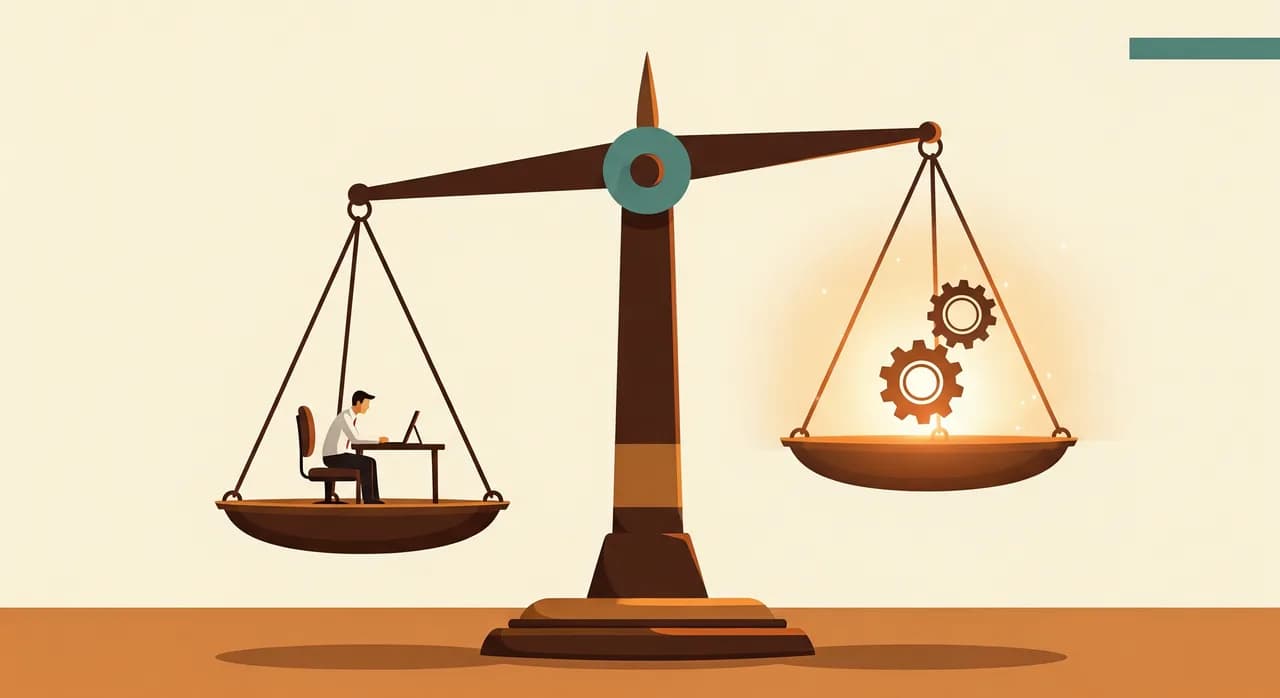
Before you can compare the two paths honestly, you have to compare them fully. Most owners dramatically under-count what a hire really costs, and slightly over-count what automation costs. Let's straighten both out.
A salary is the headline number, and it's the smallest part. On top of it sit social contributions and taxes, equipment, software seats, the desk, the holiday and sick cover, and — the one nobody budgets — your own time. Recruiting, interviewing, onboarding and managing a new person is weeks of owner attention, the scarcest resource you have. A new hire isn't productive on day one; realistically you're looking at one to three months before they're paying their way, and that ramp is a cost too.
Automation has its own true cost, and pretending it's free is the mistake in the other direction. There's the setup — sometimes a weekend, sometimes a proper project. There's a monthly tool fee, usually modest. And there's maintenance: something will change, an integration will break, and someone has to notice and fix it. A tool with no owner rots just like an unmanaged employee underperforms. But here's the asymmetry that matters: once it's built, automation's cost is roughly flat whether it runs ten times a day or ten thousand. A person's cost is not.
| What you're really paying for | New hire | Automation |
|---|---|---|
| Up-front cost | Recruiting + onboarding time | Setup / build effort |
| Recurring cost | Salary + taxes + overhead, every month | Tool fee + occasional maintenance |
| Time to value | 1–3 months to ramp up | Days to a few weeks |
| Cost when volume drops | Unchanged — you still pay | Roughly unchanged, but far smaller |
| Scales with workload | Linearly — more work, more people | Almost flat once built |
| Handles ambiguity & judgement | Yes, that's the whole point | No — needs clear rules or clean inputs |
The trick: don't choose, split the job
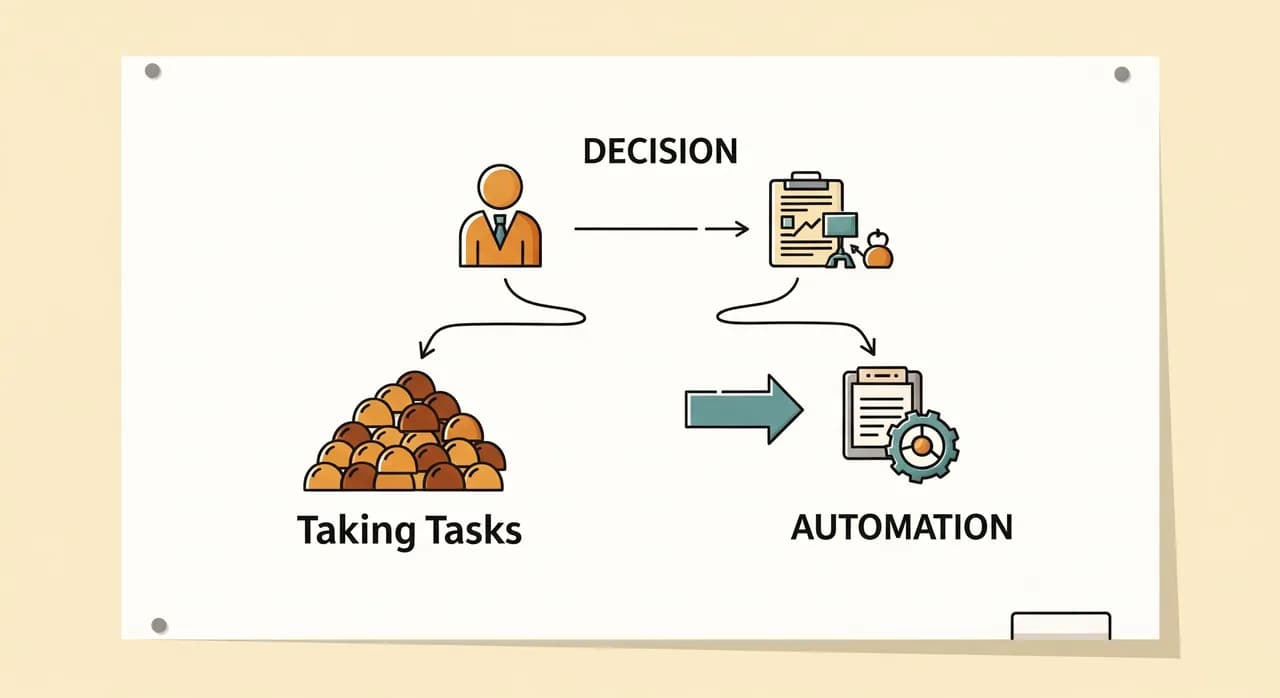
Here's the reframe that changes the whole decision. You're almost never choosing between "hire a person" and "automate the role." You're choosing how to split one pile of work into the part that needs a human and the part that doesn't. Once you see it that way, the question stops being either/or and becomes: how much of this job is actually sludge?
Take a job you're tempted to hire for and break it into its actual tasks. A "front-desk admin" might really be: answering the phone, booking appointments, sending reminders, taking payments, re-typing orders into the accounting system, answering the same product questions, and handling the occasional upset customer. Now sort those. Reminders, re-typing and routine questions are sludge — rule-based, repetitive, automatable. The upset customer, the judgement calls, the warmth on the phone — that's human work.
Do this honestly and one of two things happens. Either most of the pile turns out to be sludge, in which case you can probably automate it and not hire — or hire much smaller than you planned. Or most of it turns out to be real human work, in which case you should hire with confidence, knowing the role is worth a salary. Either way you've made the decision on evidence instead of panic.
When software clearly beats a new role
Some situations point so strongly toward automation that hiring would be a quiet mistake. If you recognise your problem in this list, reach for a tool before a job posting.
- The work is high-volume and follows the same steps every time — reminders, data entry, status updates, recurring reports.
- The pain is spiky: huge at month-end or in season, quiet the rest of the time. You can't hire half a person for two weeks a month, but a tool covers the peak for the same flat cost.
- The task is currently stealing time from skilled people who are expensive and hard to replace — every hour a senior person spends copying data is an hour mispriced.
- Mistakes come from fatigue and repetition, not from hard decisions — the kind of errors a tireless process simply doesn't make.
- You need it done at 2am, on weekends, or instantly — hours no single hire covers.
The deepest reason in that list is the third one. In a lot of small businesses the person being crushed by admin is the owner, or the most skilled tradesperson, or the one salesperson who actually closes. Hiring a junior to take the admin can work — but automating it often works better, because it removes the task entirely instead of relaying it through another salary. The cheapest hour is the one nobody has to spend.
When to hire anyway — and not feel bad about it
Automation isn't the answer to everything, and an honest guide has to say so. There's a category of work where reaching for software first is the actual mistake — where you'll spend weeks trying to encode something that a capable person handles in an afternoon.
Hire when the work needs judgement, relationships or physical presence. A new sales role, where the value is in reading a room and building trust. A second pair of hands on the tools, because someone has to physically do the job. A senior person who brings a skill your team simply doesn't have. None of that compresses into rules, and trying to automate it produces a brittle, frustrating mess that everyone routes around.
Hire, too, when the work is genuinely varied and unpredictable — when every instance is a bit different and needs someone to weigh it. Automation thrives on "same thing, again." The moment a task is mostly exceptions, a human is not just better, they're cheaper, because building automation for endless edge cases costs more than the salary it was meant to save.
A real example: the dental practice that almost hired
Let me make this concrete with a case that's typical enough to stand in for a hundred others. A two-chair dental practice — owner, an associate, two assistants, one receptionist — came to us convinced they needed to hire a second receptionist. The existing one was overwhelmed: phones ringing constantly, double-bookings creeping in, a steady drip of no-shows, and patients complaining they couldn't get through. The owner had a job advert half-written.
What the task-split revealed
We did the boring thing first: we shadowed the front desk for a few days and listed every task by the hour. The picture was stark. A large share of the receptionist's day wasn't reception at all — it was mechanical. Phoning patients to confirm tomorrow's appointments. Re-reading the same opening-hours and pricing questions off a sticky note. Manually rebooking the no-shows. Copying new patient details from a paper form into the practice system. Hour after hour of work that needed no clinical knowledge and no charm — just repetition.
The genuinely human part of the job — calming a nervous patient, reading the waiting room, handling a billing dispute with tact — was real, and valuable, and being constantly interrupted by the sludge. The receptionist wasn't overwhelmed because there was too much reception. She was overwhelmed because the admin was eating the reception.
What we set up instead
- 1Online booking with automatic remindersPatients book and reschedule themselves; the system sends confirmations and reminders by SMS and email automatically. The confirmation calls — gone.
- 2An assistant for the routine questionsThe repeat questions about hours, parking, prices and preparation now get answered instantly, around the clock, without ringing the desk.
- 3Digital intake formsNew patients fill in their details before they arrive; the data lands in the system without anyone re-typing a paper form.
- 4Gentle no-show follow-upWhen someone misses an appointment, an automatic, polite message offers them the next available slot — recovering bookings that used to just evaporate.
None of this was exotic. There was no dramatic AI; most of it was plain, reliable automation, with a light touch of language handling for the routine questions. The whole thing went live in a few weeks, in parallel with the old way, so nobody had to trust it blind.
The result
They didn't hire the second receptionist. The one they had stopped drowning — and, more importantly, got to spend her day doing the part of the job that actually needed a person. No-shows dropped noticeably, because reminders and easy rescheduling do most of that work on their own. Patients stopped complaining about the busy line, because far fewer calls were the avoidable kind. The numbers here are illustrative rather than audited, but the shape is real: the recurring cost of a second salary, avoided; the setup paid back within months; and a receptionist who was, for the first time in a while, not stressed.
“They thought they had a staffing problem. They had an admin problem wearing a staffing problem's clothes.”
The honest footnote: if their patient volume had been twice as high, or growing fast, the answer might have flipped — at some point you genuinely do need more humans. The point isn't that automation always wins. It's that they had never actually asked the question. They'd jumped straight to the advert.
A simple way to make the call
So here's the method, stripped down. The next time you feel the urge to hire, run this before you write the advert. It takes an afternoon and it has saved owners a great deal of money and regret.
- 1Write the role as a task listNot a job title — the actual tasks, hour by hour, as specifically as you can. Vague roles hide the answer.
- 2Tag each task: rule-based or judgementBe ruthless. "Sends the same email" is rule-based even if a person currently does it warmly. Warmth isn't the task.
- 3Add up the rule-based hoursTotal the time those repetitive tasks eat each week. This is the slice that's a candidate for automation, not a salary.
- 4Look at what's leftIf little remains, automate and don't hire — or hire part-time. If a lot of real human work remains, hire with confidence; you now know it's worth it.
- 5Decide on evidence, then commitWhichever way it points, you're now choosing on a clear picture instead of on exhaustion. Then go all in on that path.
Not sure whether to hire or automate?
This is exactly the question worth talking through before you commit to either. We'll look at the role you're tempted to fill, split it into what needs a person and what doesn't, and tell you honestly which way it points — with no obligation to build anything.
Talk it through with usCommon questions
Is it cheaper to automate than to hire?
Will automating mean I never need to hire?
How do I know which parts of a job to automate?
Isn't hiring better because a person can do many things?
What if I automate and then business grows and I need people anyway?

Have a nice day is a software studio that helps small and mid-sized businesses go digital — automation, AI and custom software that works in everyday operations, not just on slides.