How a 14-Person Company Cut Its Support Load With an AI Chatbot (Without Annoying Anyone)
A real, anonymised case study: how a small online retailer used a focused AI chatbot to absorb the repetitive support questions eating its team's day — and what actually moved the numbers, versus what just looked good in a demo.
 Have a nice day12 min read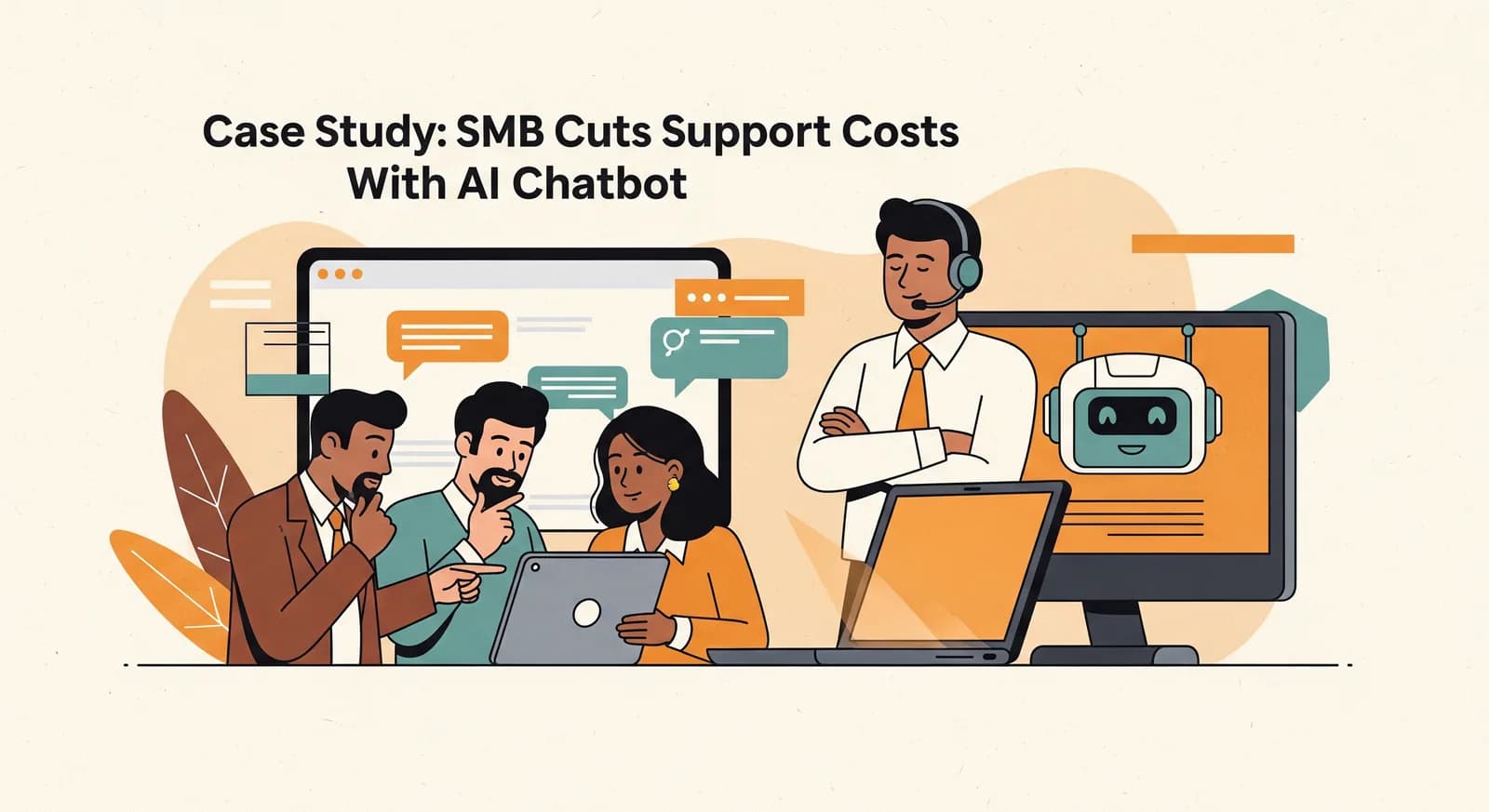
Every case study about AI support chatbots seems to feature a giant brand, a million tickets a month, and a number so large it means nothing to the rest of us. So here's the version for a normal business: fourteen people, a perfectly ordinary inbox, and a support load that was quietly burning out the two people who handled it. No magic, no robots replacing humans — just one focused chatbot pointed at the right problem. This is what actually happened, including the parts that didn't go to plan.
I want to be honest up front about what this article is and isn't. It's an anonymised account of a real project — a small online retailer in the home and garden space, the kind of company you'd never read about in a tech blog. We've changed identifying details and kept the numbers deliberately round and illustrative rather than precise, because the point isn't to impress you with a statistic. The point is to show how a small team thought through the decision, what we built, and what it was honestly worth.
If you run a business where the same handful of customer questions arrive every single day, and answering them is slowly eating the time of people you'd rather have doing something else, this is for you.
The situation: drowning in questions they'd already answered
The company sold physical products online — a few hundred SKUs, a loyal customer base, decent reviews. Support ran through a shared inbox and a live chat widget on the website. Two team members covered it between other duties: one mostly mornings, one mostly afternoons. Neither of them had "support" as their actual job title.
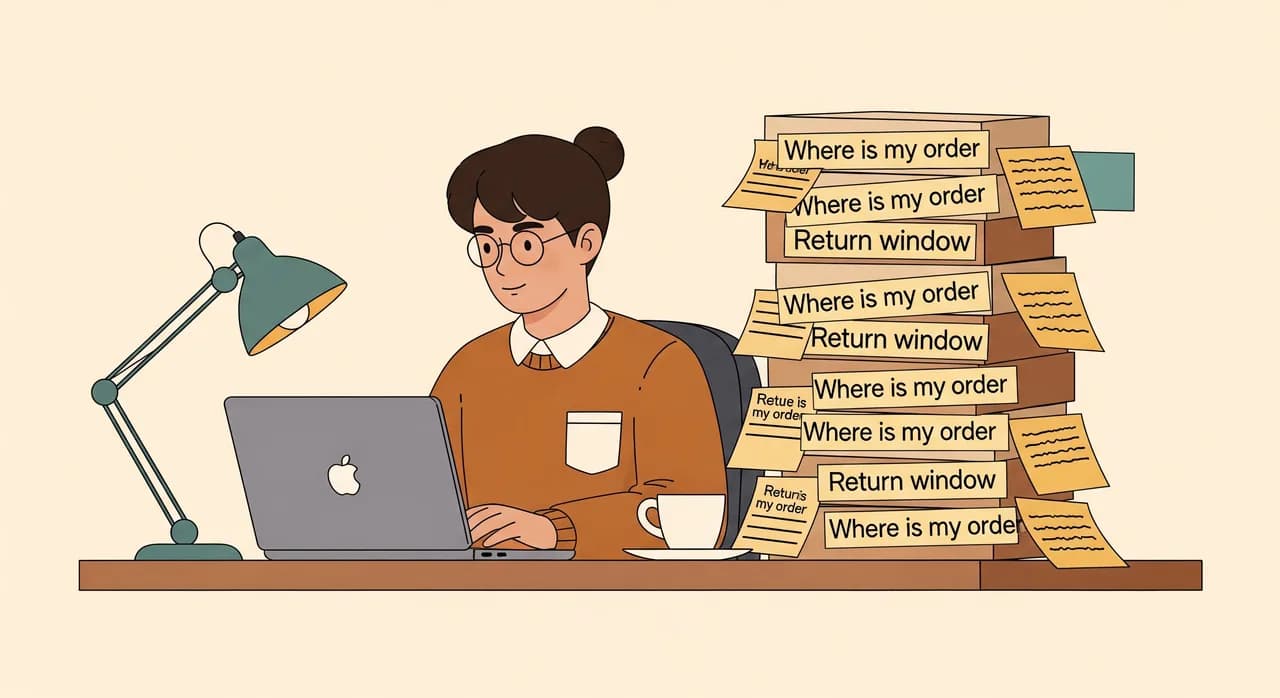
When we sat down and read through a month of their conversations, a pattern jumped out immediately. Roughly seven out of ten messages were variations of the same dozen questions. "Where is my order?" "Can I change the delivery address?" "Do you ship to [country]?" "What's your return window?" "Is this item back in stock?" The same answers, typed out again and again, all day, often during the exact hours the team most needed to focus on something else.
The owner described the real cost well. It wasn't just the minutes per reply. It was the interruption — the way a steady drip of easy questions fragments a day so badly that the harder, more valuable work never gets a clear run. They weren't looking to cut staff. They were looking to stop two capable people from spending their mornings as a human FAQ.
“It wasn't the questions that hurt. It was answering the same ten of them forty times a day, with the interesting work always waiting until the inbox went quiet.”
Why not just hire another person?
It's a fair question, and we asked it before suggesting any software. Hiring is the honest default for a growing support load, and sometimes it's the right answer. But here the math didn't favour it. The volume was real but not yet a full role — adding a person to handle mostly trivial questions felt like overkill, and the questions were so repetitive that a new hire would be bored within a week.
More to the point, hiring doesn't fix the actual problem. A third person answering "where is my order?" is still a person answering "where is my order?". The work itself was the issue: it was repetitive, rule-shaped, and arriving around the clock — including evenings and weekends, when nobody was on. That profile is almost a textbook description of where a chatbot fits and a hire doesn't.
What we actually built (and what we deliberately left out)
The temptation with any AI project is to build something that can do everything. We did the opposite. We scoped the chatbot to one job: confidently handle the dozen most common questions, and gracefully hand everything else to a human. That restraint is most of why it worked.
Crucially, this wasn't a generic bot guessing answers from the open internet. It was grounded in the company's own material — their shipping policy, returns policy, FAQ page, and a live connection to their order system so it could actually look up a real order status when a customer gave an order number. An AI answer is only as trustworthy as what it's allowed to read, and we kept it on a short, accurate leash.
The three rules we gave it
- Answer only from approved company sources — never invent a policy, a price or a delivery date.
- For order-specific questions, look up the real order; if it can't verify the customer, hand off to a human rather than guess.
- The moment a conversation drifts outside the known dozen topics, stop trying and pass it to the team with the full transcript attached.
That third rule is the one people underestimate. A chatbot that knows its limits and hands off cleanly feels helpful. A chatbot that bluffs to avoid admitting it's stuck feels like a wall — and it's the single fastest way to make customers hate the thing. We'd rather it solve 60% of conversations brilliantly than fumble 100% of them.
The rollout: quietly, with a human safety net
We didn't flip a switch and walk away. The rollout was deliberately cautious, because the first few weeks of any support automation are where trust is won or lost.
- 1Shadow mode for two weeksThe bot drafted answers but a human reviewed and sent every one. This caught the awkward phrasings and the few cases where it was confidently wrong — before any customer ever saw them.
- 2Go live on the easy halfWe let it handle the truly safe topics on its own first — store hours, return windows, shipping countries — while still routing anything order-specific through a human check.
- 3Expand to order lookupsOnce the order-system connection proved reliable, we let it answer "where is my order?" directly, with a clear one-tap path to a human if the customer wasn't satisfied.
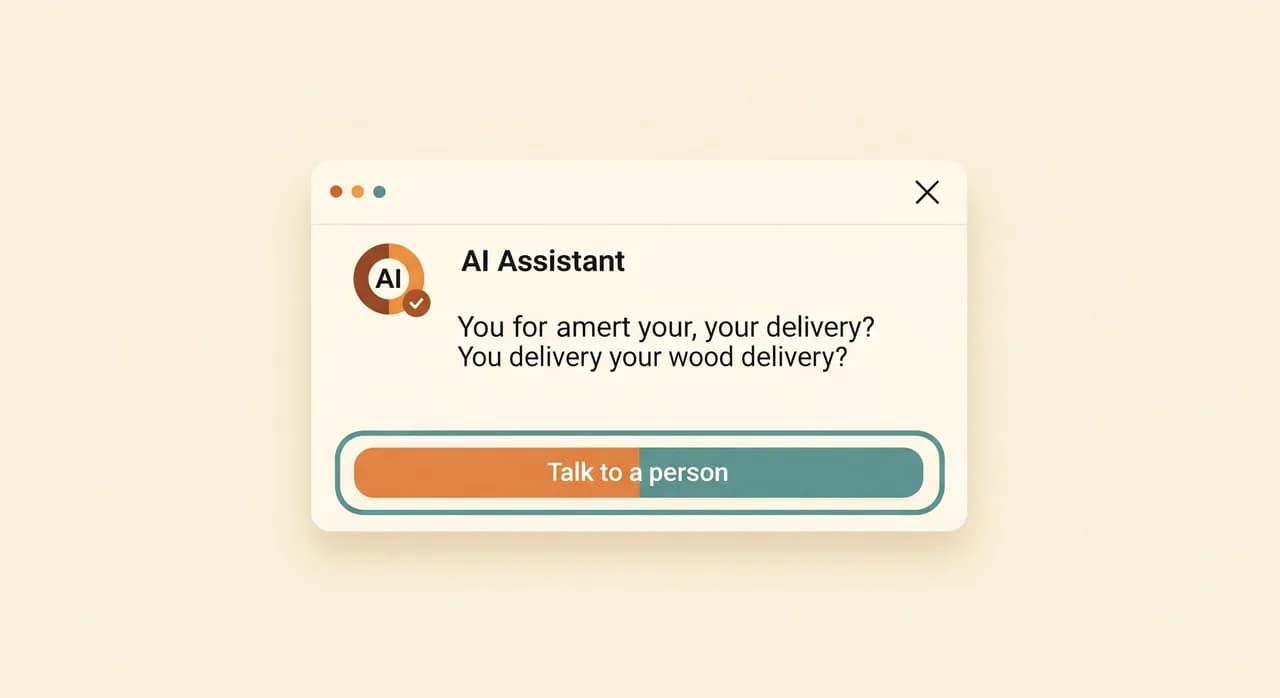
- 4Always-visible escape hatchEvery single conversation kept a plainly labelled "talk to a person" option. Nobody was ever trapped in a loop with the bot, which is the experience that gives chatbots their bad name.
Notice what's happening here: it's the same calm, reversible approach you'd use for any process change. Run alongside the old way, prove it on the safe cases, expand only when the evidence earns it, and never remove the human option entirely. None of this is exotic. It's just discipline.
The results, honestly stated
Here's where most case studies reach for a dramatic figure. I'll keep these round and illustrative, because your business is not this one and precise numbers would be false comfort. But the shape of the outcome is what matters, and it's been consistent across similar projects.
Within about two months, the chatbot was resolving a little over half of all incoming support conversations on its own — the repetitive dozen — without a human touching them. Of the rest, it handed off cleanly with a transcript, so the team picked up each case already knowing the context instead of starting cold.
| What we measured | Before | After ~2 months |
|---|---|---|
| Conversations needing a human | ~100% | ~45% |
| Median first response time | A few hours | Seconds, for handled topics |
| After-hours questions answered | None until morning | Most, immediately |
| Team time on repetitive replies | Most of two people's mornings | A fraction of it |
| Customer satisfaction on resolved chats | Steady | Held steady — not worse |
That last row matters more than any of the others. The fear with support automation is always that you trade staff cost for customer goodwill. Here, satisfaction on bot-resolved conversations held level with human ones — partly because instant correct answers to simple questions are genuinely what customers want, and partly because the clean hand-off meant nobody got stuck shouting at a wall.
The cost side was unglamorous and that's the point. The build was a modest one-off project plus a small running cost for the AI usage and hosting — far below the loaded cost of an additional hire, and a fraction of the time the two team members got back. The owner's summary, months later, was that the win wasn't the money saved. It was that their two people stopped dreading the inbox.
“Nobody got replaced. Two people just got their mornings back — and the customers asking simple questions got answered in seconds instead of hours.”
What made this one work when so many don't
Plenty of small businesses have tried a support chatbot and quietly switched it off. The difference between this project and those failures wasn't budget or technology — both were modest. It came down to a few choices that are easy to copy.
First, we picked a problem the chatbot was genuinely good at: high-volume, repetitive, answerable from documents the company already had. We didn't ask it to be clever. We asked it to be reliable about boring things. Second, we grounded it strictly in the company's own accurate sources and an order lookup, so it almost never had to guess. Third, we made the hand-off to a human feel like a feature, not a failure — visible, fast, and carrying full context.
Would this work for your business?
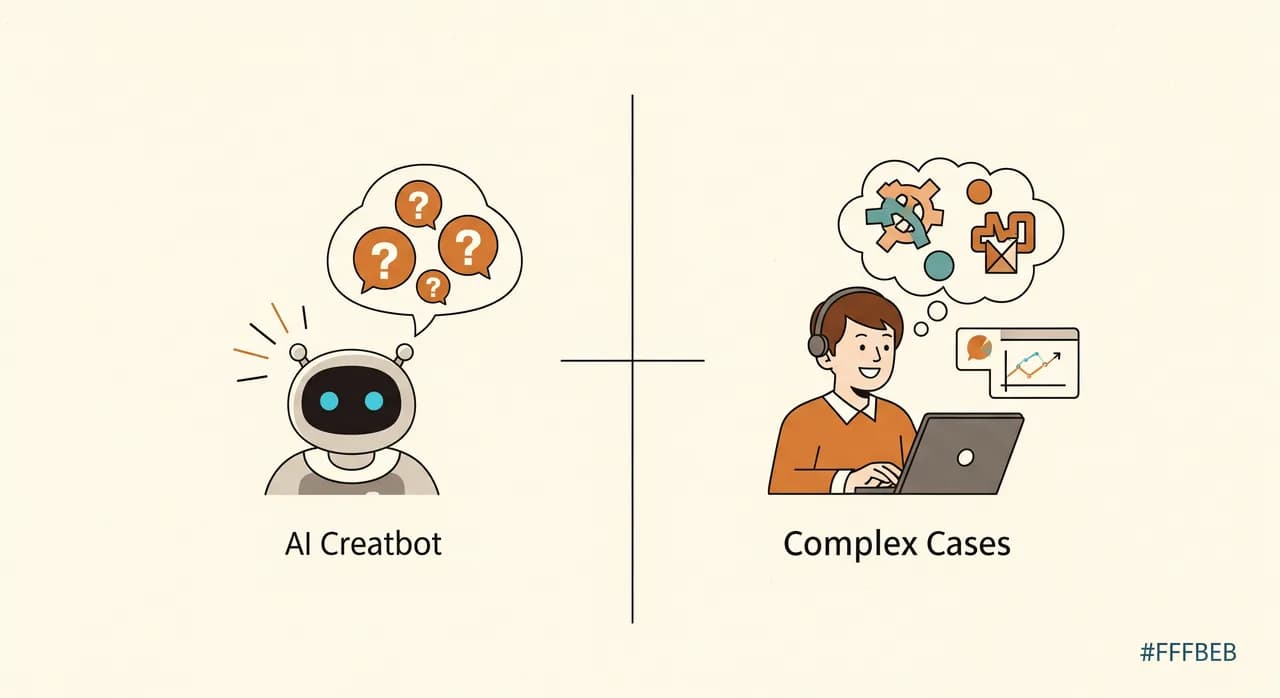
Honestly, maybe not — and that's worth saying. If your support questions are mostly unique, emotionally charged, or require negotiation, a chatbot will frustrate everyone and you should hire instead. The fit here was specific: a high volume of repetitive, fact-based questions that could be answered from existing material. That's the condition that makes this work.
But that condition is far more common than people assume. If you've ever caught yourself thinking "I've answered this exact question a hundred times", there's a good chance a focused chatbot could absorb a meaningful slice of your inbox without anyone feeling worse for it. The way to know isn't to buy a platform — it's to do what this company did first: read a month of your own conversations and count how many are the same dozen questions.
Wondering if a chatbot fits your support load?
The cheapest, most honest first step is to look at a month of your real conversations and count the repeats. We'll do that with you and tell you plainly whether a chatbot is worth it — or whether you'd be better off doing something else entirely.
See how we approach AI chatbotsCommon questions
Will an AI chatbot give my customers wrong answers?
Does a support chatbot mean cutting support staff?
How long does it take to get a chatbot like this live?
What does a chatbot like this cost to run?
What if a customer just wants to talk to a human?

Have a nice day is a software studio that helps small and mid-sized businesses go digital — automation, AI and custom software that works in everyday operations, not just on slides.