How a Heating Firm Stopped Losing Jobs to the Phone Nobody Could Answer
A six-van heating and plumbing company was bleeding work it never even knew about — calls ringing out while everyone was up a ladder. Here's exactly what we changed, and the honest numbers afterwards.
 Have a nice day13 min read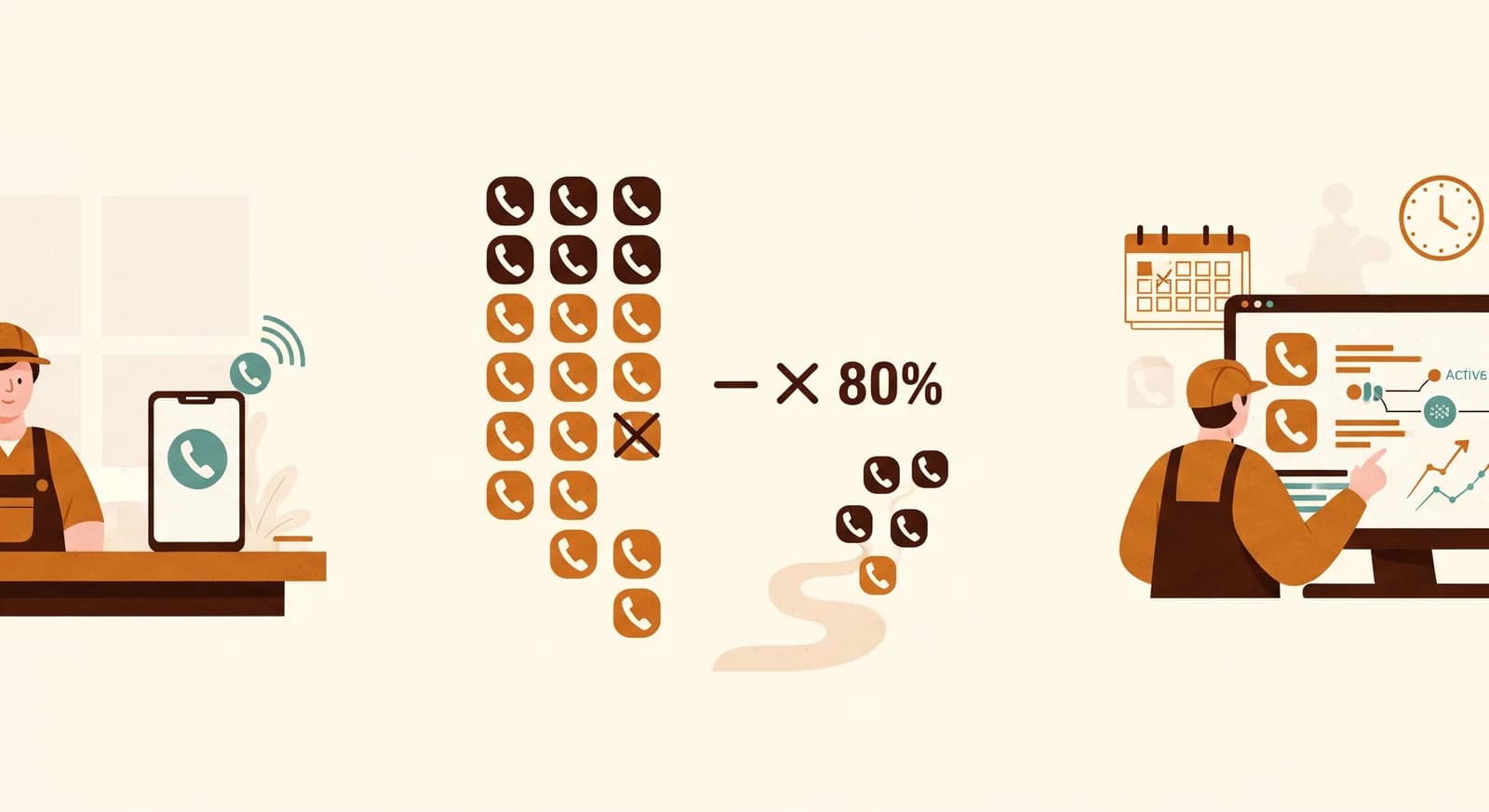
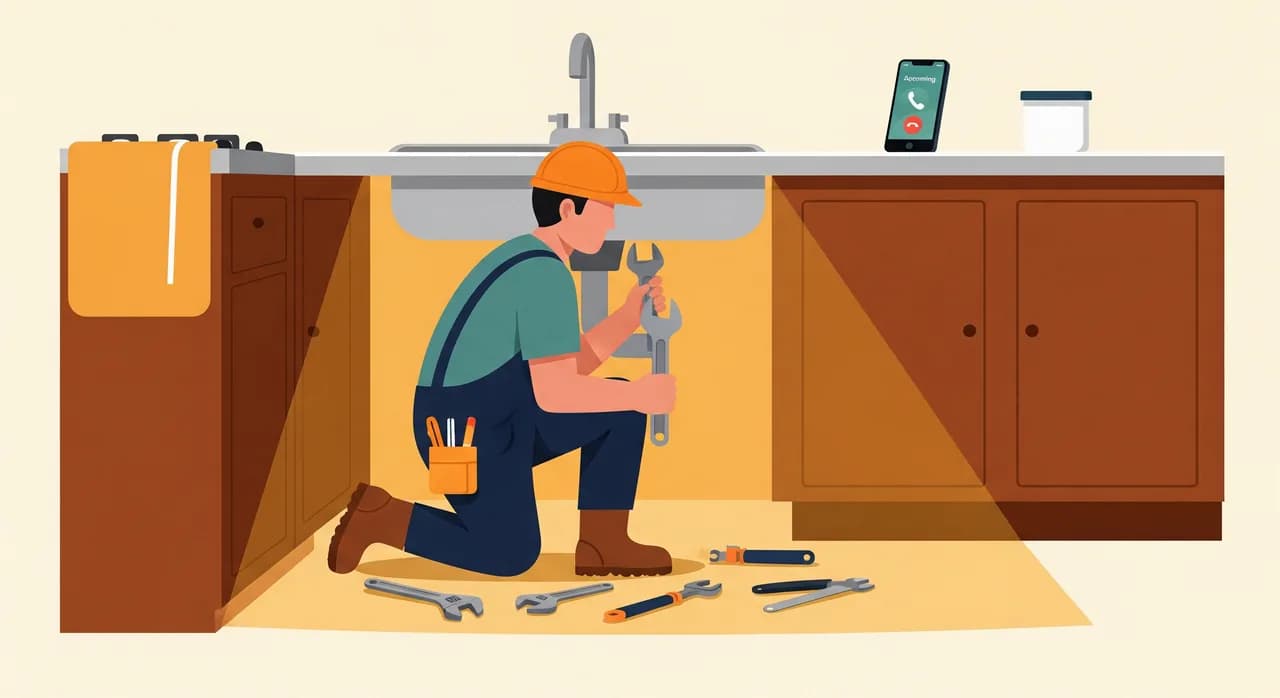
A plumber doesn't lose a job because his work is bad. He loses it because the phone rang while he was kneeling under someone's sink, the caller got voicemail, and by the time he wiped his hands and rang back, they'd already booked the next firm on the list. That gap — between the call coming in and anyone being free to answer it — is one of the most expensive, least-noticed leaks in small trades businesses. This is the story of one firm that finally measured it, and what happened when we closed it.
We've anonymised the company throughout — they asked us to, and the details that matter aren't the name anyway. Call them a heating and plumbing firm with six vans, a two-person office, and a fifteen-year reputation in their region that brought them more work than they could comfortably handle. The numbers in this piece are rounded and illustrative, drawn from their own call logs and our before-and-after tracking. They're not a promise of what you'll get — every business leaks differently — but they're close enough to the real thing to be useful.
What makes this case worth writing up isn't the technology. It's how invisible the problem was. For years they'd assumed they were busy enough. They were. They just couldn't see the second business sitting next to the first one — the one made entirely of calls that rang out.
The leak nobody was looking at
The owner came to us about something else entirely. He wanted a better booking calendar. Halfway through that first conversation, almost as an aside, he mentioned that his office manager was "drowning" and that the phone "never stops, except when we need it to." That throwaway line was the real project.
When we pulled three months of call records from their phone provider, the picture was stark. Across a normal week, roughly one in three inbound calls went unanswered. Not at night — during the working day. The office manager was one person doing five jobs, and every time she was on another line, walking to the storeroom, or processing an invoice, calls stacked up and rolled to a voicemail that most people never bothered to leave a message on.
Trades callers don't leave messages. They're often standing in a flooded utility room with a problem that needs solving today. If you don't pick up, they don't wait — they scroll down to the next result and dial again. The firm wasn't competing on price or quality. They were competing on who answered first.
“They didn't have a marketing problem. They had a business made of two halves — the jobs they won, and the jobs that rang out — and they could only see one of them.”
We did a rough, deliberately conservative back-of-the-envelope sum with the owner. If even a third of those missed calls were genuine new work, and an average job was worth a few hundred euros, the leak was costing them more than a full-time salary a year. He went quiet for a moment. Then he asked the question every owner asks: "So why didn't I notice?" Because a missed call leaves no trace. A won job is visible. A lost one is silence.
What we ruled out first
The obvious fix is to hire someone. A second person in the office to catch the overflow. We talked it through honestly, because sometimes that genuinely is the right answer — and it's our job to say so even when it isn't the thing we sell.
But the maths didn't work for them. The call load was spiky, not steady. Mornings and the hour after lunch were chaos; long stretches in between were quiet. A second full-time hire would be overwhelmed at the peaks and idle in the troughs, and the salary plus the overhead would swallow most of the value they were trying to recover. They'd be paying for a full-time person to solve a part-time problem.
A traditional answering service was the next candidate. They'd tried one years before and hated it. The agents didn't know a combi boiler from a heat pump, took messages that were missing the one detail that mattered, and made callers feel like they'd reached a call centre in another country — which they had. For a firm whose whole brand was "we actually know what we're doing," that was worse than voicemail.
What we actually put in place
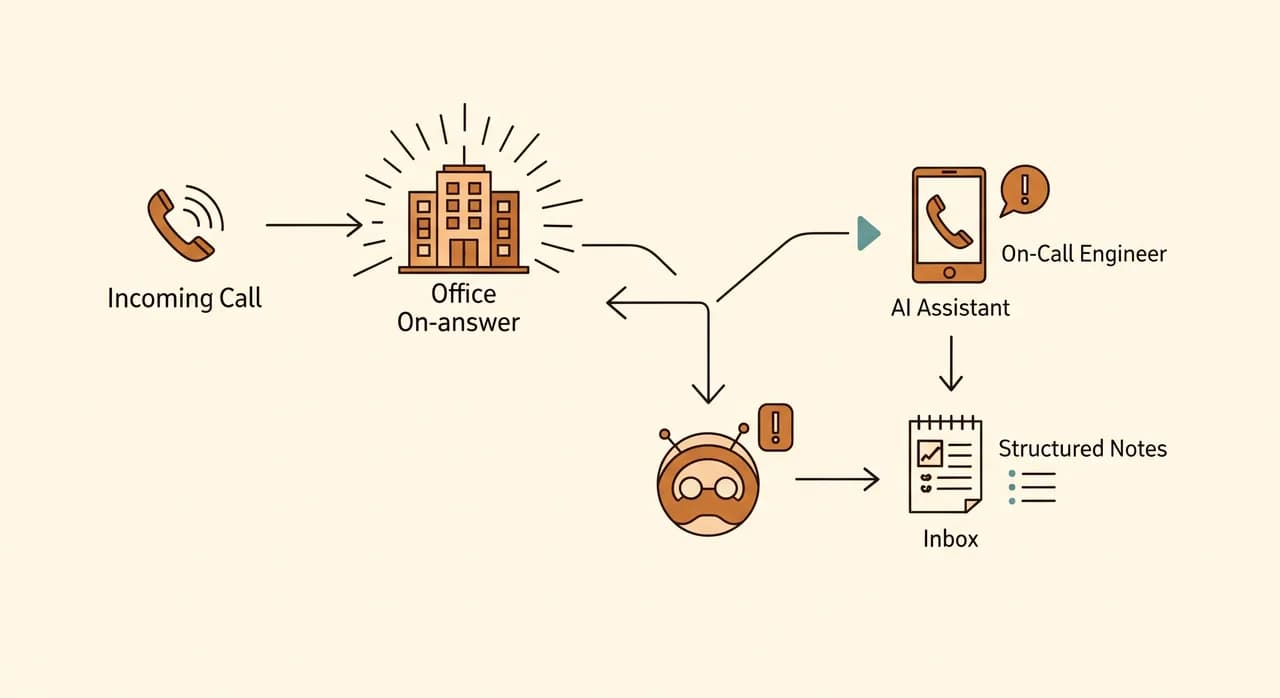
The solution we landed on was an AI phone assistant that sits behind their existing number — not replacing the humans, but catching everything the humans couldn't get to. The rule was simple: ring the office first, as always. If nobody picks up within a few rings, the call rolls to the assistant instead of to a dead voicemail.
The assistant answers in a natural voice, greets the caller by the company name, and does the few things that actually matter for a trades firm: it works out whether this is an emergency (a leak, no heating, no hot water) or a routine enquiry (a quote, a service, a question), captures the caller's name, number, address and the gist of the problem, and tells them clearly what happens next. Emergencies get flagged and pushed straight to the on-call engineer's phone. Everything else lands as a tidy, structured message in the office inbox and the booking system, ready for a callback.
Crucially, it never pretends to be human and it never tries to do too much. It doesn't quote prices it can't stand behind. It doesn't book complex jobs it might get wrong. It does the one thing the firm was failing at — making sure no caller hits a wall — and it hands the judgement calls back to people.
The handover logic that made it work
The detail that turned this from a gimmick into something the team trusted was the handover. We spent more time on "when does this thing get out of the way" than on anything else. A confused caller, an existing customer with a sensitive complaint, anything the assistant wasn't confident about — those route to a human as fast as possible, with the context already captured so the caller never has to repeat themselves.
That single principle — capture everything, decide little, escalate cleanly — is what kept the assistant from doing damage. An AI that overreaches loses you customers faster than a missed call ever could. One that knows its lane quietly saves them.
How we rolled it out without scaring anyone
The office manager was, understandably, sceptical. She'd seen the bad answering service. She'd seen robots butcher her callers. So we didn't flip a switch and walk away — we ran it like a careful experiment, and we let her be the one holding the off switch the whole time.
- 1Listen-only weekFor the first week the assistant only handled true overflow — calls that would otherwise have been lost entirely — and every interaction was reviewed together with the office manager. Nothing was hidden from her.
- 2Tune the wordingWe adjusted the greeting, the questions and the emergency rules based on what real callers actually said. The trade's own vocabulary went in: the assistant learned that 'no heat and a baby in the house' is an emergency.
- 3Widen the netOnce she trusted the messages it was producing, we let it catch more — any call unanswered after a few rings, including the lunchtime crush and the early-evening tail.
- 4Add the after-hours layerOnly when daytime was solid did we extend it to evenings and weekends, so genuine emergencies could still reach the on-call engineer instead of waiting until Monday.
- 5Keep a human vetoThe office manager kept full visibility and the ability to turn it off in one click. She never needed to — but knowing she could was what made her relax.
The results, with the honest caveats
After three months of full operation, we compared the call logs against the same quarter's baseline from before. The headline number: missed calls dropped by roughly 80%. Calls that used to ring out into nothing were now either answered by a person or caught by the assistant, with the details captured and a callback queued.
That's the figure in the title, and it's the one we're most confident about, because it comes straight from the phone system — answered versus unanswered is easy to count. The downstream numbers are softer, and we want to be straight about that.
| Measure | Before | After | Note |
|---|---|---|---|
| Inbound calls unanswered | ~1 in 3 | ~1 in 15 | Straight from the phone logs |
| After-hours emergencies missed | Most | Near zero | Now routed to on-call engineer |
| Callbacks with full details ready | Patchy | Almost all | Structured capture, no chasing |
| Office manager's 'phone stress' | High | Much lower | Her words, not a metric |
| New jobs recovered per month | Unknown | A meaningful handful | Estimated, hard to attribute exactly |
On the revenue side, we can't claim a clean, audited figure, and we won't pretend to. What we can say is that the firm now captures a meaningful number of jobs each month that would previously have rung out and gone to a competitor — enough, by the owner's own reckoning, to cover the cost of the system many times over and then some. The honest version is: the call-answering number is hard data; the euros are a confident estimate built on it.
“The thing that surprised me wasn't the new work. It was that my office manager stopped dreading the phone. That alone was worth it.”
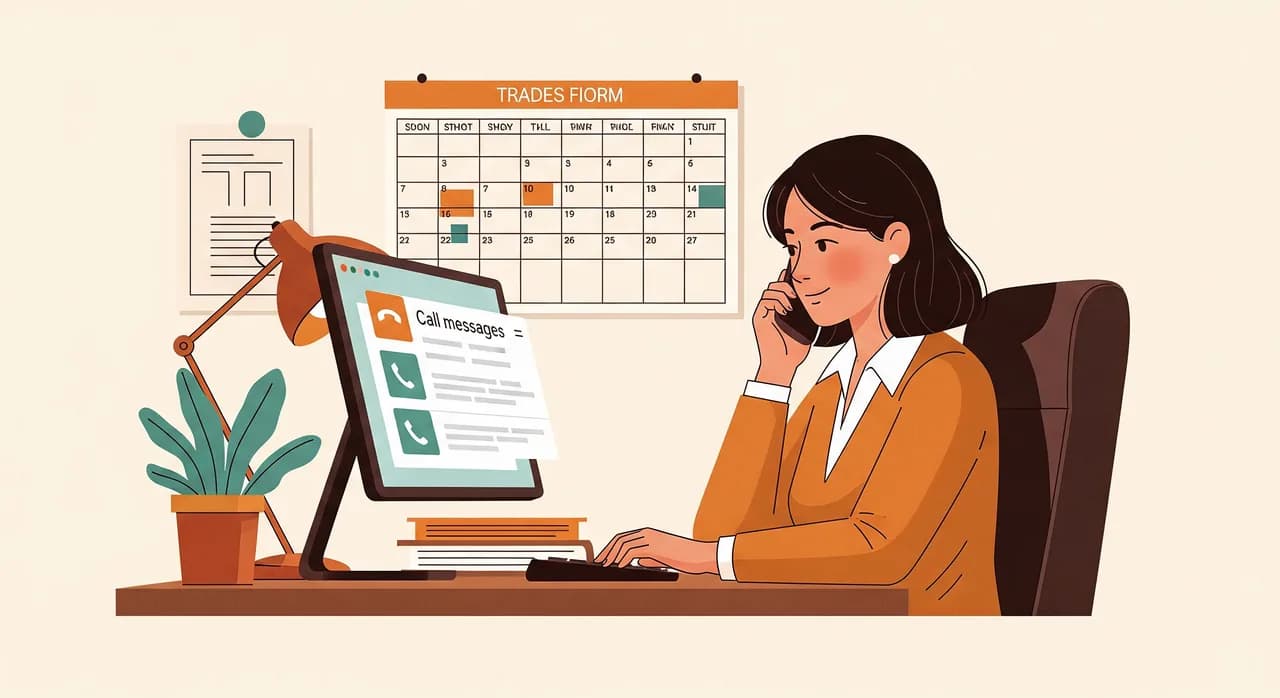
That last point matters more than the spreadsheet suggests. The office manager stopped being interrupted by every ring, stopped feeling guilty about the calls she couldn't reach, and got to do the focused work — scheduling, invoicing, looking after existing customers — that actually needed a human brain. The assistant didn't replace her. It gave her her job back.
What transfers to your business — and what doesn't
Before you read this and assume an AI phone assistant is your answer too, a few honest qualifiers. This worked because the firm had a specific, measurable leak: high call volume, spiky timing, callers who won't wait, and a single overloaded office. If your phone rarely rings, or your callers happily leave voicemails and wait, the maths looks completely different and you may not need any of this.
- It fits best where missed calls equal lost jobs — trades, clinics, service businesses, anywhere callers shop the next number when you don't pick up.
- It works because it stayed in its lane: capture and route, not quoting or hard decisions.
- It needed real measurement first — we didn't guess the leak, we counted it.
- It succeeded because of the slow rollout and the human veto, not despite them.
- It didn't replace anyone — it absorbed the overflow a person couldn't physically reach.
The broader lesson has nothing to do with AI. It's that the most expensive problems in a small business are usually the invisible ones — the ones that leave no trace in your accounts because the lost job never became a line item. Measure where your work actually leaks before you spend a cent fixing it. For this firm, the leak happened to be the phone. For yours, it might be something else entirely.
Wondering how many calls you're quietly losing?
Most firms have no idea what their phone leaks until someone counts it. We'll look at your call patterns with you and tell you honestly whether an AI assistant is worth it — or whether something simpler fixes it first.
See how the AI phone assistant worksCommon questions
Won't customers hate talking to an AI instead of a person?
How is this different from a normal answering service?
Did the firm have to replace their phone system?
Is the 80% reduction in missed calls realistic for any business?
How long did it take to get it working properly?

Have a nice day is a software studio that helps small and mid-sized businesses go digital — automation, AI and custom software that works in everyday operations, not just on slides.