Custom AI Software vs Off-the-Shelf Tools: How to Decide Without Overpaying
Every AI tool promises to fix your business in a week. Some will. Some will quietly trap you. Here's an honest way to tell when a ready-made tool is enough — and when it's worth building something of your own.
 Have a nice day13 min read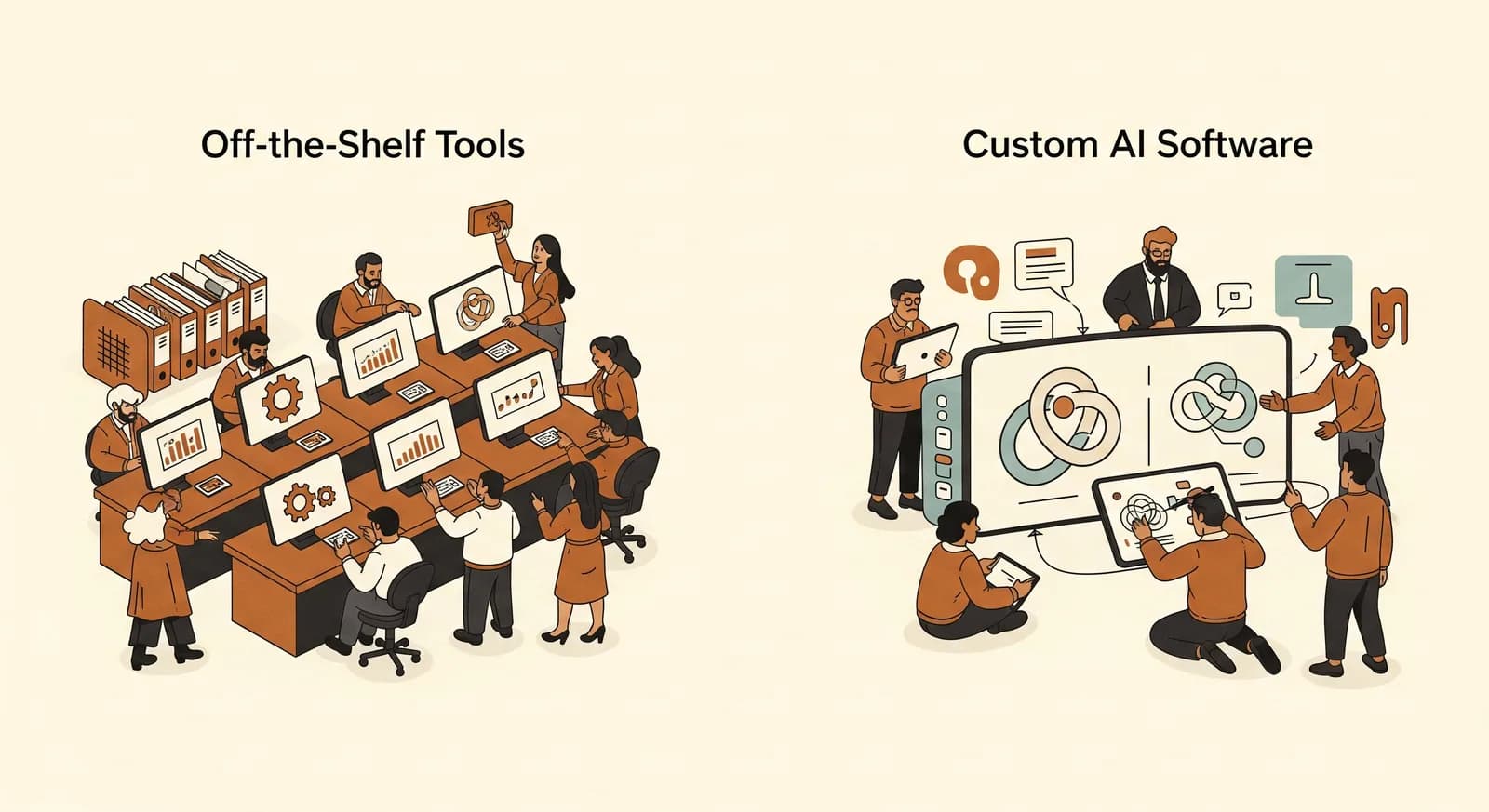
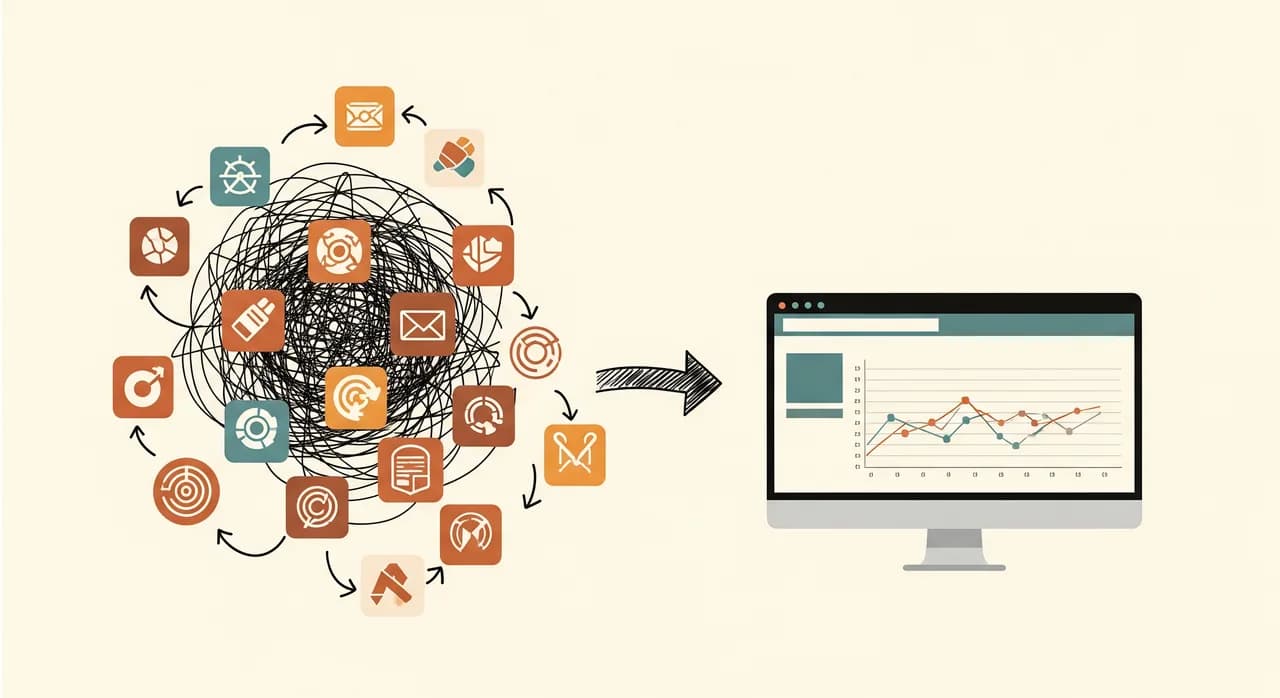
There's a moment that catches almost every small-business owner off guard. You've stitched together five or six AI tools — one for the inbox, one for the chatbot, one for the notes, one for the thing nobody quite remembers signing up for — and instead of feeling faster, you feel like you're managing a small zoo. Each tool is fine on its own. Together they don't quite fit the way you actually work. That moment is the real start of the custom-versus-off-the-shelf question, and almost nobody frames it honestly.
I'll be straight with you about my angle: we build custom AI software for a living. You'd expect me to tell you to build. I'm going to do the opposite for most of this article, because the truth is that most businesses should start with off-the-shelf tools and stay there far longer than a vendor would like. Building too early is one of the most expensive mistakes a small company can make. But there's a real line where ready-made stops fitting — and crossing it without noticing is its own expensive mistake.
So this is the decision, laid out the way I'd explain it across a table to someone paying with their own money. Not "custom is better" or "just use the cheap tool." A way to figure out which side of the line your business is actually on, and what it costs to be wrong in each direction.
What each option really is (beyond the sales pitch)
Let's strip the marketing off both. An off-the-shelf AI tool is software somebody else built for thousands of businesses at once. You rent it, usually monthly. It's cheap to start, fast to switch on, and maintained by someone else — which is genuinely valuable. The catch is that it was designed for the average customer, and you are not the average customer. You bend your process to fit the tool, not the other way around.
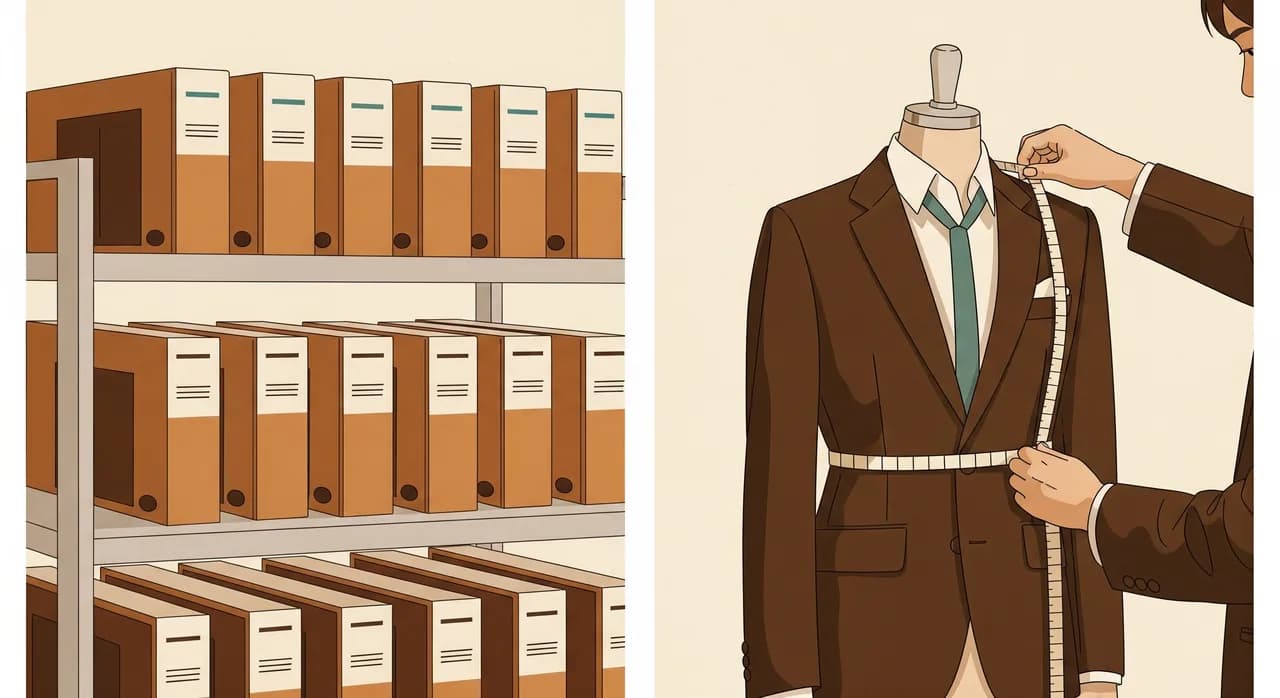
Custom AI software is the inverse. It's built around how your business actually runs — your data, your steps, your quirks. It fits like a tailored jacket instead of one off the rack. The cost of that fit is real: it takes longer to get the first version live, it costs more up front, and it's yours to maintain (or yours to pay someone to maintain). In exchange you own it outright, it does exactly what you need and nothing you don't, and nobody can triple the price or sunset the product on you next quarter.
Neither is "better." They're trade-offs pointing in opposite directions: speed and low cost now versus fit and control later. The whole skill is knowing which trade-off your situation rewards.
Why you should almost always start off-the-shelf
Here's the part vendors like me are supposed to bury. For most small businesses, most of the time, the right first move is a ready-made tool. Not because custom is bad, but because you usually don't yet know what you'd build. Until you've lived with a process for a while, your idea of the perfect tool is a guess — and building software to match a guess is the most reliable way to waste money I know of.
Off-the-shelf tools are a cheap way to learn. You spin one up for a few euros a month, run your real work through it, and within weeks you discover what actually matters: which features you touch every day, which you never open, where it fights you. That knowledge is worth a fortune later. If you ever do build, you'll build the right thing, because the off-the-shelf tool already taught you what the right thing is.
There's also a quiet financial argument. A small monthly subscription is an expense you can cancel the moment it stops earning its keep. A custom build is capital you've already spent. When you're not yet certain a process is here to stay, renting flexibility beats owning commitment. Optionality has value, and off-the-shelf is mostly optionality.
“Building software to match a guess is the most reliable way to waste money I know. Rent first; the tool will tell you what to build.”
Where off-the-shelf quietly breaks down
So when does the rented tool stop being enough? Rarely with a bang — usually with a slow accumulation of friction you've stopped noticing because you've normalised it. The tell is when you and your team start building workarounds around the software: the secret spreadsheet that holds the real data, the copy-paste ritual between three apps, the one person who "knows how to make it work." Those workarounds are the software telling you it no longer fits.
A few specific failure modes show up again and again. None is fatal on its own; the danger is when several stack up at once.
- You're paying for five tools that each do one slice of a job your business treats as a single flow — and stitching them together by hand.
- Your most important process has a quirk no off-the-shelf tool supports, so everyone routes around the software.
- Per-seat or per-usage pricing has crept up to where the subscriptions cost more than a person.
- Your data lives in someone else's system and getting it out (or keeping it private) is becoming a real concern.
- The tool changed — a price hike, a removed feature, a forced migration — and you had no say and no exit.
- The thing that makes you different from competitors is exactly the thing no generic tool can do.
Notice the theme running through all of these: fit, control, and cost-at-scale. Off-the-shelf is unbeatable on speed and starting price. It gets steadily weaker as your needs get more specific, your volume grows, and your dependence on someone else's roadmap deepens. The break-even isn't a number you can look up — it's the point where the friction of bending your business to the tool outweighs the cost of a tool that bends to you.
What custom AI software actually buys you
When custom does make sense, what are you really paying for? It helps to be precise, because "it's tailored to you" is too vague to base a decision on. In practice, a custom build buys four concrete things.
An exact fit to how you work
Custom software models your process, including the quirky bits that make you competitive. No more bending your workflow to fit someone else's assumptions, no more features you'll never use cluttering every screen. The whole tool is the part you need — which, day to day, is the difference between software people fight and software people forget is even there.
One system instead of a stack of seven
Instead of five tools held together with manual copy-paste and one fragile integration, you get a single system where your data flows on its own. The hours your team currently spends being human glue between apps come straight back. For a lot of businesses, this is the single biggest return — not a flashy AI feature, just the end of re-typing.
Ownership and control of your data
You decide where it runs, who can see it, and how the AI uses it. For anyone handling sensitive client information — health, finance, legal, anything regulated — this isn't a luxury, it's often the whole reason to build. Your data stops being a line item in someone else's privacy policy and becomes an asset you actually hold.
No surprise rug-pulls
Nobody can triple your price, remove the feature your business depends on, or shut the product down because it didn't hit their growth targets. When the software is yours, its roadmap is yours. For a process at the core of how you make money, that stability can be worth more than any single feature.
The real costs of custom — both kinds
I won't pretend custom is free of downsides; pretending is how people get burned. There are two kinds of cost, and the second one surprises people more than the first.
The obvious cost is up-front money and time. A custom tool isn't a card payment and a login; it's a project with a discovery phase, a build, and a launch. You're paying for someone's expertise to design and build the thing, and you're waiting weeks rather than minutes to use it. That's the price of fit, and it's real.
The cost people forget is ownership going forward. Custom software is a thing you now own, which means it's a thing you now maintain. It needs occasional updates, the AI models behind it move on, and one day you'll want to change something. This isn't a reason to avoid building — it's a reason to build with a partner who plans for it, and to factor a modest ongoing budget into the decision instead of pretending launch day is the end.
A simple framework for deciding
Here's the test I actually use. You don't need a spreadsheet or a consultant. Run the process you're thinking about through these questions and the answer usually becomes obvious.
- 1Is this process core to how you make money?If it's the thing that makes you different or carries your revenue, fit matters and custom is on the table. If it's generic back-office admin every business does the same way, lean off-the-shelf.
- 2Does a good tool already do it well?If a ready-made tool fits 80% or more without you contorting your workflow, use it. Don't build what you can rent for the sake of owning it.
- 3Are you building workarounds?Count the spreadsheets and copy-paste rituals propping up your current tools. A stack of workarounds is a strong signal the off-the-shelf fit has run out.
- 4Add up what you're already payingTotal your monthly subscriptions for this job across a year. If that number is approaching the cost of building and running something of your own, the maths has shifted.
- 5How specific and stable is the need?Build for needs that are specific to you and here to stay. Rent for needs that are generic, or that you're still figuring out. Uncertainty favours renting; certainty favours building.
Roughly: the more a process is core, specific, stable, and badly served by generic tools, the more custom wins. The more it's generic, uncertain, or already well covered, the more off-the-shelf wins. Most businesses end up with a mix — and that's the correct answer, not a compromise.
| Your situation | Lean off-the-shelf | Lean custom |
|---|---|---|
| A good tool already fits 80%+ | Yes | |
| Process is generic back-office admin | Yes | |
| You're still figuring the process out | Yes | |
| The process is core to your revenue | Yes | |
| You're glued together across 5+ tools | Yes | |
| Data privacy or ownership is critical | Yes | |
| Subscriptions now cost more than a build | Yes |
The two mistakes that cost the most
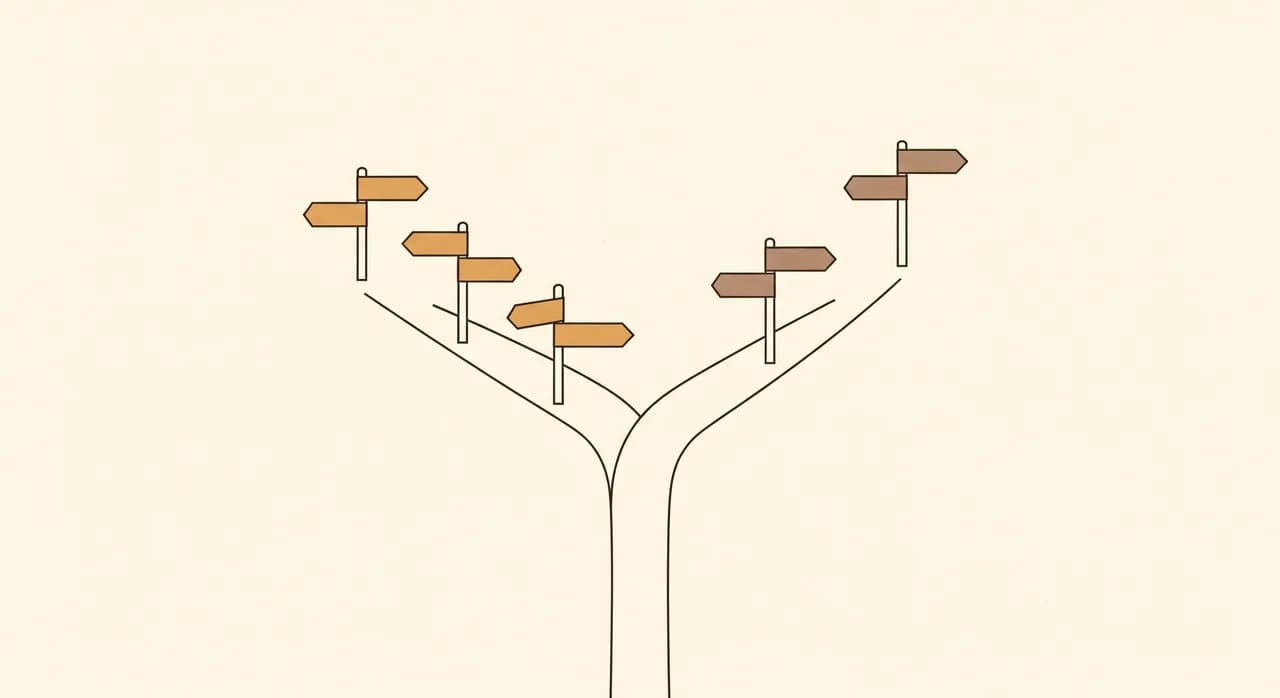
After enough of these conversations, the same two errors show up — and they pull in opposite directions, which is what makes the decision feel slippery.
Building too early. An owner gets excited, decides a generic tool feels beneath them, and commissions custom software for a process they haven't fully understood yet. They pay for a tailored suit before they know their own measurements. The fix is patience: live on a cheap tool first, let it teach you the requirements, build only when the spec is obvious.
Renting too long. The opposite owner clings to a stack of mismatched tools years past their fit, normalising more and more manual work, watching the subscription bill creep up, telling themselves a custom build is "too expensive" without ever doing the maths. They pay for the wrong fit forever in lost hours. The fix is to total the real cost — money plus wasted time — honestly, once a year. Often the build that felt unaffordable is cheaper than the status quo.
Not sure which side of the line you're on?
We'll look at the process honestly and tell you if an off-the-shelf tool already fits — even when that means we don't build anything. If custom genuinely makes sense, you'll know exactly why, and what it costs.
See how we approach custom softwareCommon questions
Is custom AI software always more expensive than off-the-shelf tools?
How do I know if I've outgrown my current tools?
Can I mix off-the-shelf tools and custom software?
Should I wait for AI to improve before building anything custom?
What happens to custom software after it's built?
Have a nice day is a software studio that helps small and mid-sized businesses go digital — automation, AI and custom software that works in everyday operations, not just on slides.