Restaurant Reservations: From Ringing Phones to Full Tables
The phone rings during the dinner rush, nobody can answer it, and a table for four walks to the place across the street. This is the honest guide to moving restaurant reservations online — without losing the warmth that made people call in the first place.
 Have a nice day15 min read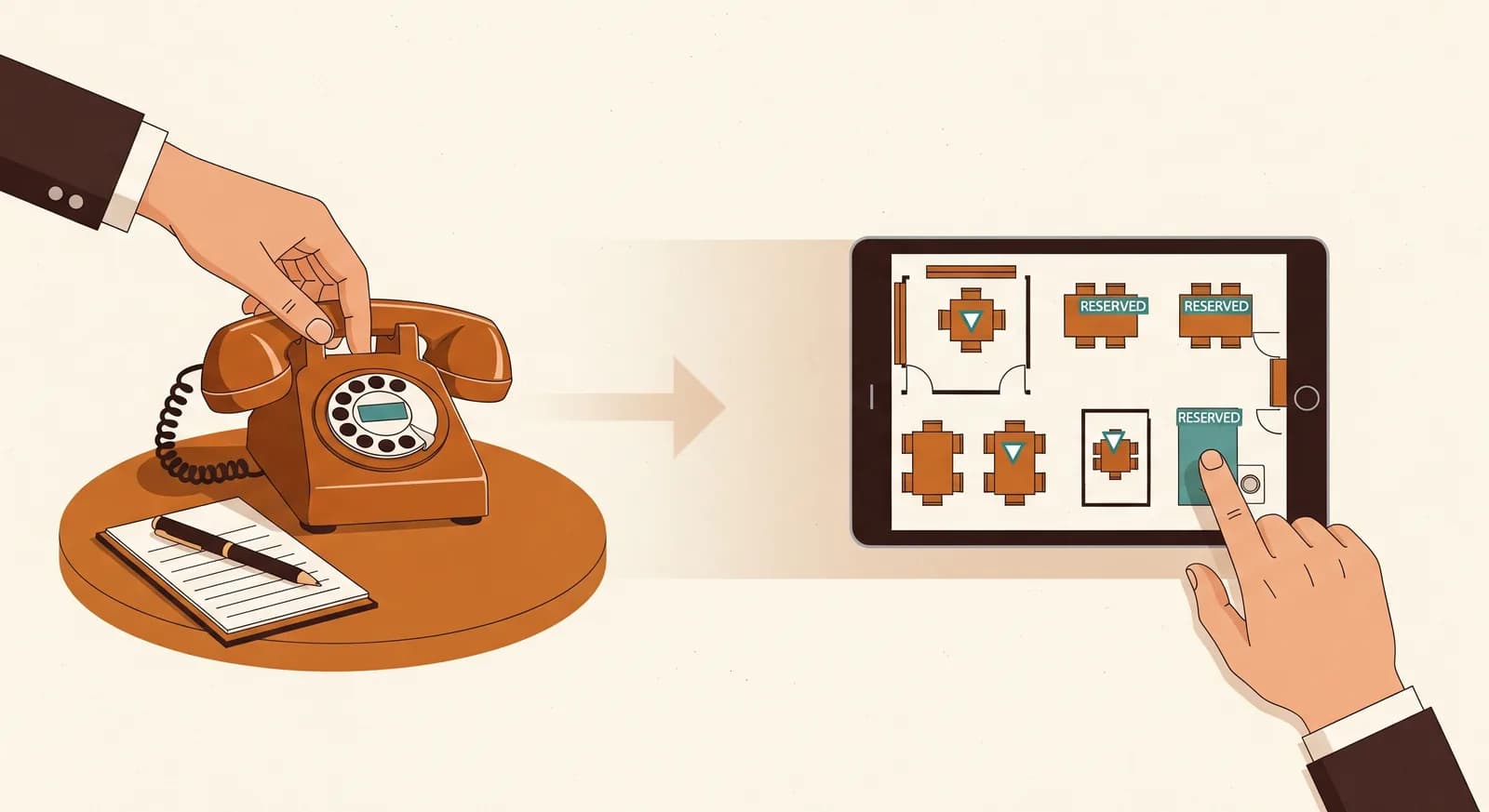
It's 7:40 on a Friday. Two servers are on the floor, the pass is backed up, and the phone behind the bar has rung four times in the last ten minutes. Nobody can pick it up — and even if someone could, they'd have to stop plating, find the paper book, squint at a coffee-stained page, and figure out whether table six is really free at nine. So the phone rings out. Somewhere across town, a couple looking for a table for four shrugs and books the bistro next door instead. That, in one scene, is the quiet leak in most small restaurants: not bad food, not bad service — bookings that simply never get answered.
I've spent a lot of time in the back offices of restaurants that are doing everything right in the kitchen and quietly bleeding covers at the host stand. The owners are proud, rightly, of how they treat people on the phone — and that pride is often the exact reason they've resisted putting reservations online. They picture a cold, clicky form replacing a warm conversation. I understand the fear. But the choice isn't warmth versus efficiency. Done properly, an online reservation system handles the boring 80% so your team has more attention left for the human moments that actually matter.
This is a practical guide to making that switch without losing your soul or your regulars. No jargon, no pretending one glossy app fixes everything. Just how reservations really work in a small restaurant, where the money leaks, and how to plug it.
What the phone is quietly costing you
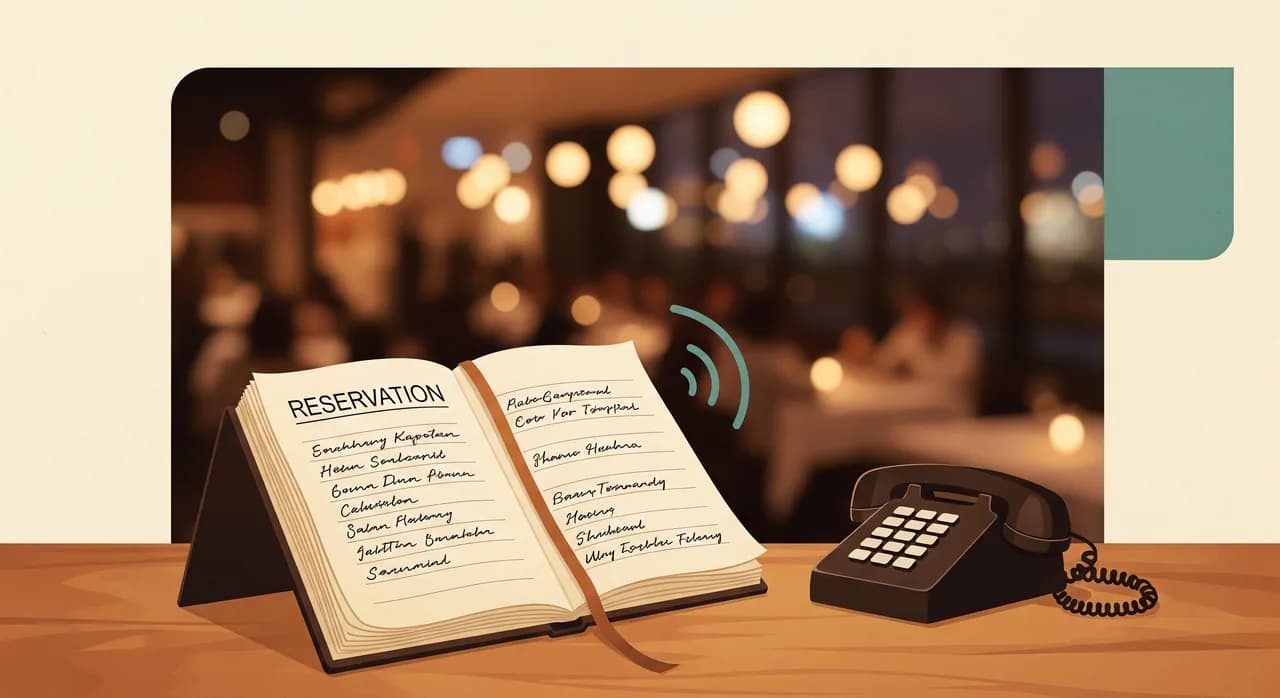
Let's be honest about the paper book. It works — right up until the moment it doesn't. It can't ring two people at once. It can't take a booking at 2am when someone's deciding where to celebrate an anniversary. It can't read its own handwriting three hours later. And it lives in exactly one place, behind the bar, which means the one person who understands the table plan becomes a bottleneck for the entire night.
The costs are real, even if they never show up on an invoice. There's the missed-call cost: every unanswered ring during service is a table that may never call back. There's the double-booking cost: two parties, one table, an awkward apology, and a review you'll be reading for the next six months. And there's the after-hours cost, which is the big one — a huge share of restaurant bookings now happen outside opening hours, on a phone, from the sofa. If the only way to book you is to call during service, you're invisible exactly when people are deciding.
“A phone that rings out during the dinner rush isn't a missed call. It's a table that booked somewhere else.”
None of this means the phone is bad. Some of your best guests will always want to call, and you should let them. The point is narrower: the phone should be one way in, not the only way in. Right now, for most small restaurants, it's a single narrow door — and it's locked precisely when the most people are trying to walk through it.
What an online reservation system actually does
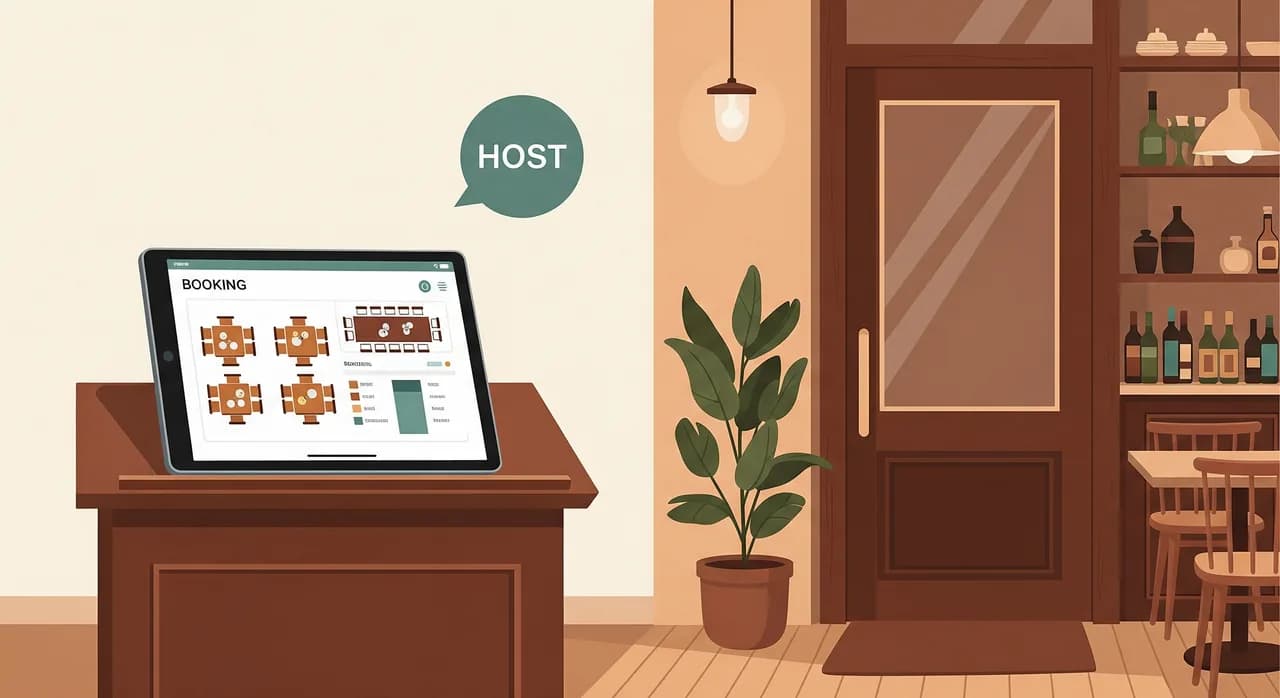
Strip away the marketing and a good reservation system does four plain things. It takes bookings around the clock from your website, your Google profile and your social pages, even when the restaurant is dark. It holds your real table plan, so it knows a two-top can't suddenly seat six and never offers a table you don't have. It sends confirmations and reminders automatically, which is where no-shows go to die. And it gives you one live view of tonight's book that every member of staff can see at once, from the floor, the office, or home.
That last one sounds small and is actually the heart of it. When the book lives in software instead of behind the bar, the host isn't a single point of failure anymore. A server can check the nine o'clock covers from a tablet on the floor. The owner can glance at Saturday's bookings from home on a Tuesday and decide whether to call in extra help. The kitchen can see that a party of twelve is landing at eight and prep accordingly. Reservations stop being a secret only one person holds.
The no-show problem, and how software dents it
Ask any restaurateur what keeps them up at night and no-shows are near the top. A table booked for six that never arrives isn't just an empty chair — it's food prepped, a section held, and a walk-in turned away for a party that ghosted you. On a busy weekend, a handful of no-shows can quietly erase the night's profit.
An online system won't make no-shows vanish, but it dents them in three concrete ways. The first is the automatic reminder: a friendly message a day before and a few hours before, with a one-tap way to cancel. Most no-shows aren't malicious — people simply forget, and a reminder with an easy cancel button turns a silent ghost into a freed-up table you can resell. The second is frictionless cancellation: if cancelling is as easy as not showing up, people cancel, and you get the table back in time to fill it. The third, for restaurants that need it, is a card hold or deposit on larger parties and peak slots — not to punish anyone, but to make the booking feel real.
“Most no-shows aren't rudeness. They're a forgotten booking with no easy way to cancel. Fix the cancel button and half the problem walks away.”
Filling the quiet shifts, not just managing the busy ones
Everyone thinks of reservation software as a tool for the rush. The bigger, less obvious win is what it does for the quiet nights. Once your bookings live in one place, you can finally see the shape of your week — which shifts run hot, which run cold, and which tables sit empty at the same time every Tuesday.
With that visibility you can act. A short message to past guests about a slow midweek evening. A small offer on a shoulder slot — early diners at six, a set menu on a Wednesday. A note on the booking page that the 6pm seating has space when 8pm is full, nudging flexible guests into the gaps. None of this is possible when your only record of who's dined with you is a stack of paper books in a drawer. The data you've been throwing away for years is exactly what fills the quiet shifts.
A small bistro that stopped losing Fridays
Let me make this concrete with a story that's a composite of several restaurants we've worked with — the details blurred, the pattern exact. Picture a forty-cover neighbourhood bistro: great kitchen, loyal locals, one harried owner who also expedited on busy nights. Bookings were taken on the phone and written in a thick paper diary behind the bar. On paper, business was fine. In reality, Friday and Saturday were leaking covers and nobody could prove it.
The situation
When we sat down and actually counted, the leaks were everywhere. During the Friday rush, the phone rang out roughly a dozen times a night — uncounted, unbooked, gone. No-shows ran high on weekends because there was no reminder system at all; if you forgot your booking, nobody nudged you. And the owner was the only person who could read the table plan, which meant every booking question routed through one already-overloaded human. The quiet midweek shifts, meanwhile, sat half-empty while nobody thought to do anything about them.
What we set up
Nothing exotic. We put a reservation system in that matched the real floor — the two-tops that combine, the ninety-minute turn on weekends, the window table held back for walk-ins. Online booking went live on the website and the Google profile, so guests could book at midnight if they liked. Automatic confirmations and reminders went out by email and text, each with a one-tap cancel. The phone stayed exactly as it was — staff just logged call-in bookings into the same screen, so the book was finally complete and visible to everyone.
- 1Mapped the real floor firstBefore any software, we drew the actual table plan — sizes, combinations, turn times, the seats held for walk-ins. The system only works if it matches the room.
- 2Opened the online doorBooking buttons on the website and Google profile, taking reservations 24/7. The phone stayed live for guests who prefer to call.
- 3Turned on reminders and easy cancelsAutomatic confirmation, a reminder the day before and a few hours before, each with a one-tap cancel that frees the table instantly.
- 4Gave the whole team the viewHost, servers, kitchen and owner all see the same live book. No more single bottleneck behind the bar.
The result
These numbers are illustrative, not a lab measurement — but they track what we consistently see. Within a couple of months, those dozen-odd missed calls a night turned into online bookings that landed while the team kept working. Weekend no-shows fell by something like a third once reminders and easy cancellation were in place. And the owner got the most valuable thing of all back: attention. Freed from being the human booking engine, they could expedite, greet regulars, and actually run the room. The quiet Tuesdays even started filling, because for the first time the owner could see them and send a small nudge to past guests.
Keeping the human touch (the part owners worry about)
Here's the fear I hear most: “If I put booking online, it stops feeling like my place.” It's a fair worry and worth taking seriously, because a badly set-up system really can feel cold. But the warmth in a restaurant was never in the act of writing a name in a book. It's in how you greet people at the door, how you remember that table seven likes the corner, how you handle a birthday. Software doesn't touch any of that — if anything, it gives your team more room for it.
A few choices keep it personal. Let the system capture guest notes — allergies, anniversaries, the regular who always wants the same table — so the floor walks up already knowing. Keep the confirmation messages in your voice, not a robotic template. And never remove the phone; just stop relying on it as the only door. The goal is a system that does the clerical work silently in the background so your people can be more present, not less.
- Store guest preferences and history, so regulars feel remembered, not processed.
- Write confirmations and reminders in your restaurant's own tone, warm and short.
- Keep the phone line open for guests who prefer a conversation.
- Use the freed-up time at the host stand to greet, not to scribble.
- Flag VIPs and returning guests in the book so the floor knows before they sit down.
Choosing a system without overbuying
The market is full of platforms that want to sell a small bistro the same machinery they sell a national chain. You don't need most of it. Be ruthless about what actually matters for a restaurant your size, and ignore the feature lists designed to dazzle.
| What to look at | Why it matters | Watch out for |
|---|---|---|
| Real table-plan logic | Stops double-bookings; respects how your floor actually works | Plain forms that just collect names |
| Automatic reminders | Single biggest lever on no-shows | Reminders with no easy cancel button |
| Works on your own site & Google | Captures bookings where guests already are | Locking all bookings inside a marketplace |
| Fair, predictable pricing | Per-cover fees can quietly eat your margin | Charges per online cover on top of a subscription |
| Owns your guest data | Your guest list is an asset — it should be yours | Platforms that keep the relationship, not you |
Rolling it out without a chaotic week
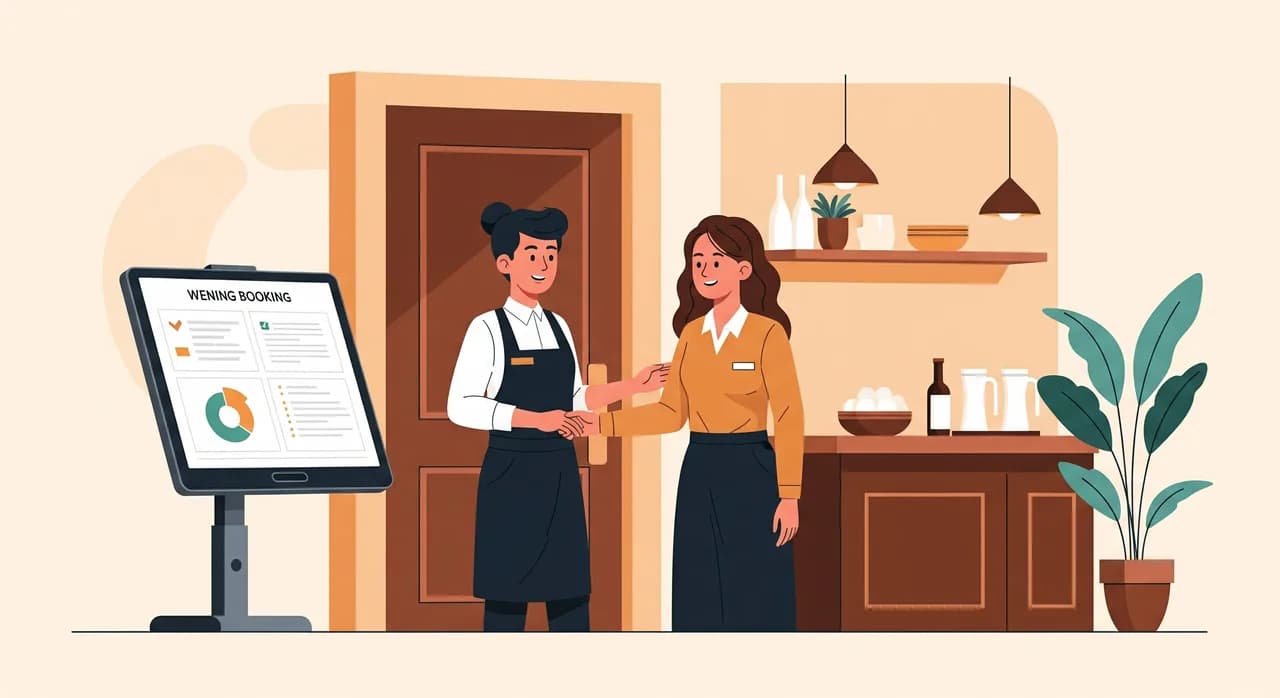
The switch goes wrong when restaurants flip everything overnight and bin the paper book on day one. Treat it instead as a calm handover. Run the new system alongside the diary for a week or two: take online bookings, but keep logging phone calls in both places until you trust the screen. Brief the team properly — fifteen minutes on a quiet afternoon, not a panicked thirty seconds before a Friday service. And pick one person to own it during the changeover, so questions have somewhere to go.
Only when a couple of weekends pass without surprises do you retire the paper book — and when you do, make sure everyone knows it's gone, so nobody keeps a secret diary alive in a drawer. A second hidden book is how double-bookings creep back in. One source of truth, visible to all, is the entire point.
Want bookings handled without losing the human touch?
We set up reservation systems that match how your restaurant actually runs — your floor, your turn times, your voice. Tell us about your room and we'll show you the simplest way to stop losing tables to a ringing phone.
See how we set up restaurant reservationsCommon questions
Will an online system replace taking bookings by phone?
How much does a restaurant reservation system cost?
Can it really reduce no-shows?
Isn't an online form too cold for a restaurant?
How long does it take to switch over?

Have a nice day is a software studio that helps small and mid-sized businesses go digital — automation, AI and custom software that works in everyday operations, not just on slides.