What AI Still Can't Do for Your Business in 2026
AI in 2026 is genuinely impressive — and genuinely oversold. Here's a calm, honest map of where it shines, where it quietly fails, and how to put it to work without betting your business on a tool that can't keep a promise.
 Have a nice day13 min read
There's a particular kind of conversation I've had a dozen times in the last year. A business owner sits down, slides their phone across the table, and shows me something a chatbot wrote that genuinely impressed them. Then, almost in the same breath, they ask whether it can run their customer service, their hiring, their pricing — basically their whole business. The honest answer is the uncomfortable one: not the way you're imagining, and some of it not at all. This piece is about that gap, because nobody selling AI wants to talk about it.
I run an AI practice. I spend my days building this stuff for small and mid-sized companies, and I'm a believer — I've watched it claw back real hours for people who had none to spare. But the loudest voices in 2026 are still selling a fantasy where you point AI at a problem and walk away. That fantasy quietly costs businesses money, trust and sometimes customers. So instead of another breathless list of what AI can do, here's the more useful map: where it still falls down, why, and how to work with it anyway.
None of this is anti-AI. It's the opposite. The businesses getting the most out of AI right now are the ones who understand its edges precisely — they hand it exactly the work it's good at and keep a human firmly in charge of the rest. Knowing the limits isn't pessimism. It's the whole skill.
The thing it can't do: know when it's wrong
If you remember one limitation, make it this one. Today's AI does not reliably know when it's wrong. It will give you a confidently incorrect answer in exactly the same tone it uses for a correct one. There's no little flicker of doubt, no "I'm not sure about this part." The made-up phone number, the invented policy, the wrong VAT rate — all delivered with the same calm authority as the truth.
People in the industry call these hallucinations, which makes them sound rare and exotic. They're neither. They're a normal, expected behaviour of how these systems work: they're predicting plausible-sounding text, not looking facts up in a ledger. Most of the time the most plausible answer is also the correct one, which is why it feels reliable. But "most of the time" is a terrifying standard when the answer is going into a customer quote or a legal document.
“AI doesn't lie to you on purpose. It just can't tell the difference between knowing something and confidently guessing — and neither can you, from the outside.”
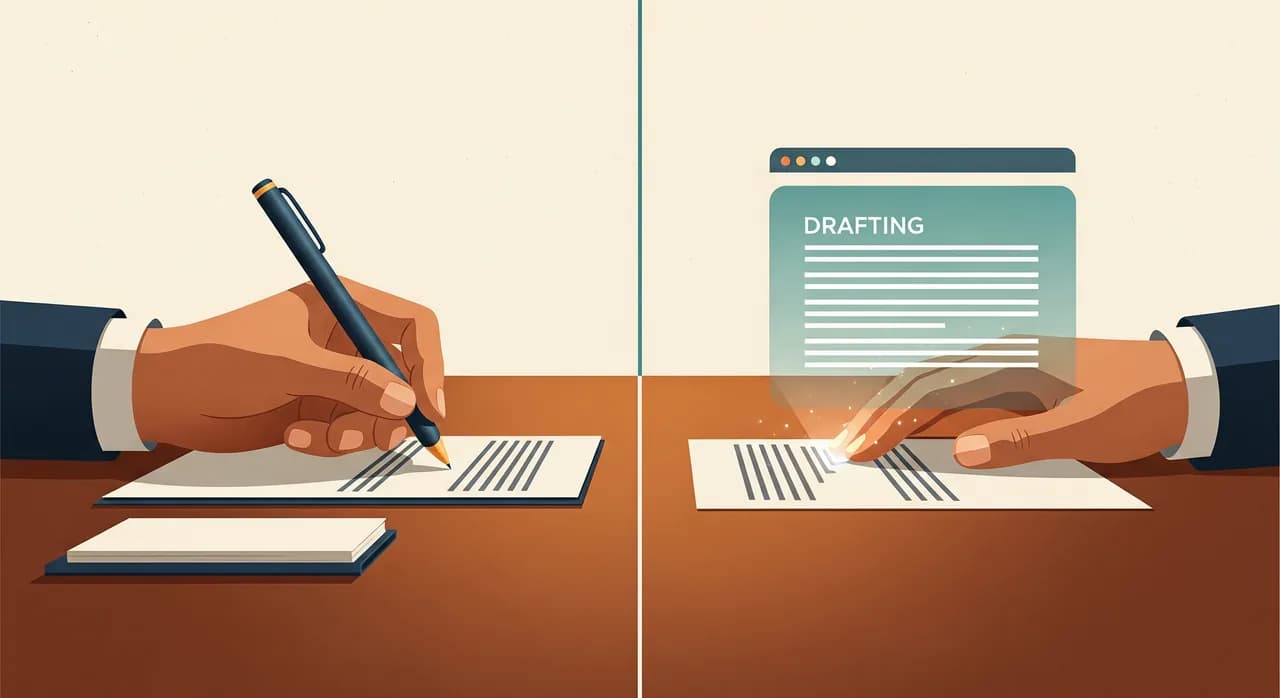
This single trait shapes everything else in this article. It's why AI is wonderful for drafting and dangerous for deciding. It's why "human in the loop" isn't a buzzword but a hard requirement for anything that matters. And it's why the question is never "can AI do this task" but "what does it cost me when AI gets this task wrong, and how would I even notice?"
Real judgement, when the stakes are real
AI is genuinely good at tasks with a clear right answer or a low cost of being wrong. Summarise this email. Draft a friendly reply. Sort these messages into three piles. The moment a task requires weighing things that can't be neatly measured — fairness, risk, reputation, the long game with a particular customer — it starts to wobble.
Think about pricing a tricky one-off job. A human quoting it isn't just running numbers; they're reading that this client is a referral from your best customer, that they were stressed on the phone, that saying yes to an awkward deadline now might unlock three easy jobs later. AI sees none of that context unless you spell out every piece of it — and even then it's pattern-matching, not judging. It has no skin in the game. It will never lie awake worrying it quoted too low.
It doesn't know your business
A general AI model has read an astonishing amount of the public internet. What it has never read is the specifics of your business — your prices, your stock, your regular customers, the quiet rule that Mrs. Hofer always gets the corner table, the supplier you stopped using last spring. Out of the box, it knows the world in general and your company not at all.
You can fix a lot of this. Feeding the model your own documents, prices and policies — the technique gets called retrieval or grounding — dramatically improves how useful and accurate it is for your specific situation. This is, honestly, most of the real work in a good AI project: not the clever model, but the unglamorous plumbing that connects it to your actual data. But two things stay true even then. Your information has to be tidy and current for this to work — point AI at a messy, out-of-date price list and it will confidently quote last year's prices. And it still won't know the things that live only in your head and were never written down.
Doing the exact same thing twice
Here's one that catches people off guard. Ask AI the same question twice and you can get two different answers. Usually both are fine; sometimes one is noticeably better than the other; occasionally one is just wrong. For creative drafting, that variety is a feature. For a process that needs to behave identically every single time — calculating a discount, applying a rule, producing a number a regulator might check — it's a real liability.
This is why I get nervous when someone wants to put a language model in charge of arithmetic or strict rules. If the task is "apply 12% to orders over 500 euros," you don't want something that usually gets the maths right. You want a plain, boring piece of automation that gets it right 100% of the time because it literally can't do anything else. Save the AI for the part that genuinely needs language or judgement, and let dependable old-fashioned logic handle the part that needs to be exact.
| Task | AI alone? | Why |
|---|---|---|
| Drafting a reply to a routine email | Yes, with a glance | Low stakes, easy to fix, plays to its strengths |
| Summarising a long document | Mostly | Useful, but check anything you'll act on |
| Calculating prices or tax | No | Needs exact, repeatable rules — use plain logic |
| Answering FAQs from your data | Yes, if grounded | Great when fed tidy, current information |
| Deciding a refund or a hire | No | High stakes, real judgement, hard to undo |
| Final legal or financial sign-off | No | Confident errors here are genuinely costly |
The human things — and why they still matter commercially
It's easy to wave a hand at "the human touch" as if it's a soft, sentimental thing. It isn't. For a small business it's often the entire competitive advantage — the reason a customer chooses you over a faceless chain. And it's precisely the part AI can imitate but not actually have.
AI can write words that sound empathetic. What it can't do is genuinely care that a regular customer's order arrived broken on the morning of their daughter's birthday, then quietly do the thing that turns a bad day into a story they tell their friends. It has no relationships, no reputation on the line, no memory of the time that same customer covered for you when a delivery was late. Empathy as text is cheap now. Empathy as action, from someone with something at stake, is exactly what people will keep paying a premium for.
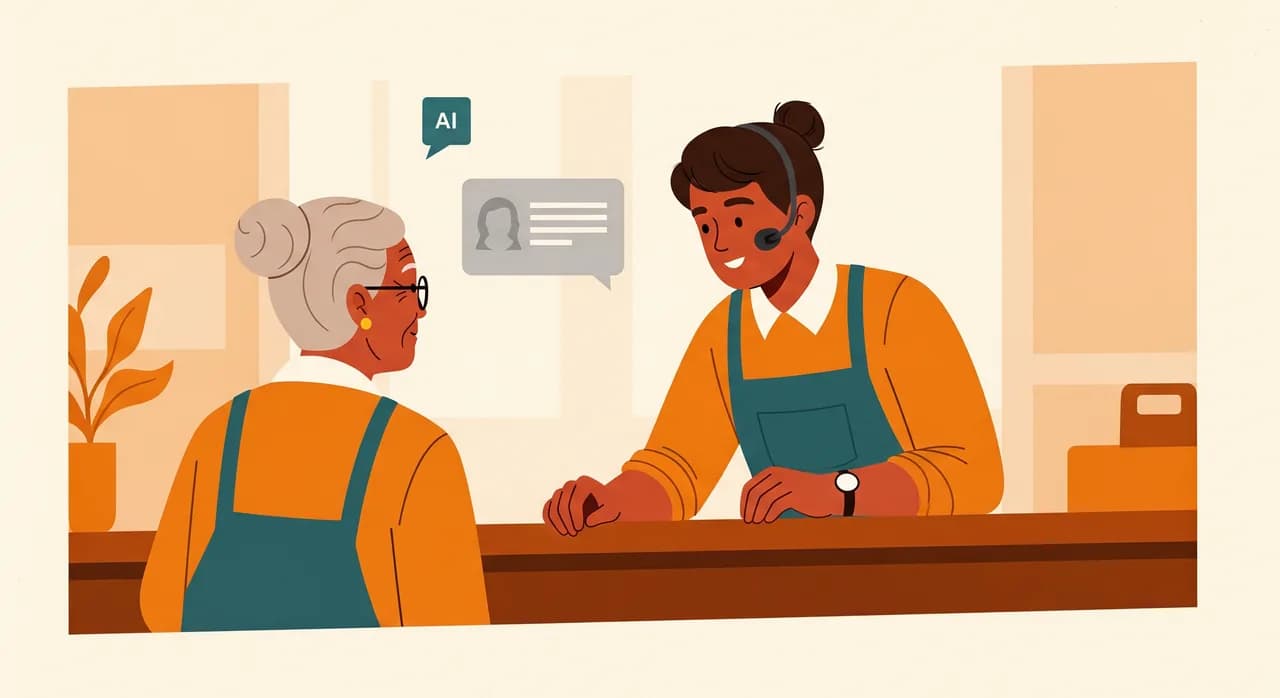
There's also accountability, which is more practical than philosophical. When something goes wrong, a customer wants a person to own it. "The AI made a mistake" satisfies no one — and increasingly, it satisfies no regulator either. If AI touches a decision that affects someone, you are still responsible for the outcome. That responsibility can't be outsourced to a model, and pretending otherwise is how reputations get damaged.
The quiet costs nobody mentions in the demo
The slick demo never shows you the boring parts that make or break an AI project in real life. They're worth naming, because they're the difference between a tool that helps for years and one that's quietly abandoned in three months.
- Supervision. Anything customer-facing needs a human checking the early output. That's real time, especially at the start, and it never quite drops to zero.
- Maintenance. Your prices change, your policies change, the model itself changes. An AI assistant fed last year's information will confidently give last year's answers.
- The awkward 20%. AI handles the easy majority of cases beautifully and then hands you the weird, angry, high-stakes ones — which were always the hard part anyway.
- Trust, once lost. One confidently wrong answer to a customer can undo months of goodwill. The reputational downside is asymmetric: many small wins, one large loss.
None of these are reasons not to use AI. They're reasons to use it with your eyes open, on tasks where the supervision is cheap and the cost of an error is survivable. Which, conveniently, is most of the genuinely useful work anyway.
So how do you actually use it well?
All of this points to a way of working that's far calmer — and far more profitable — than the hype suggests. You stop asking AI to be an employee and start using it as a fast, tireless assistant that drafts, sorts and suggests, while a person stays in charge of anything that carries weight. Here's the shape of it.
- 1Sort every task by cost-of-errorFor each thing you're tempted to hand AI, ask: if it gets this wrong, is that a shrug, a fix, or a disaster? Shrugs and easy fixes are fair game. Disasters keep a human in charge.
- 2Let AI draft, never decideThe reliable pattern is AI prepares, a person approves. A drafted reply you skim in five seconds. A shortlist a human picks from. A summary you sanity-check. The judgement stays with you.
- 3Ground it in your real, tidy dataBefore going live, make sure the information AI answers from is written down, in one place, and current. Garbage in, confident garbage out.
- 4Use plain automation for anything exactMaths, rules, anything that must be identical every time — give it to dependable logic, not a language model. Reserve AI for the messy, language-shaped parts.
- 5Keep a human owner and a way to notice failuresName one person who watches the output, and build a simple way to catch it when AI gets something wrong — before your customer does.
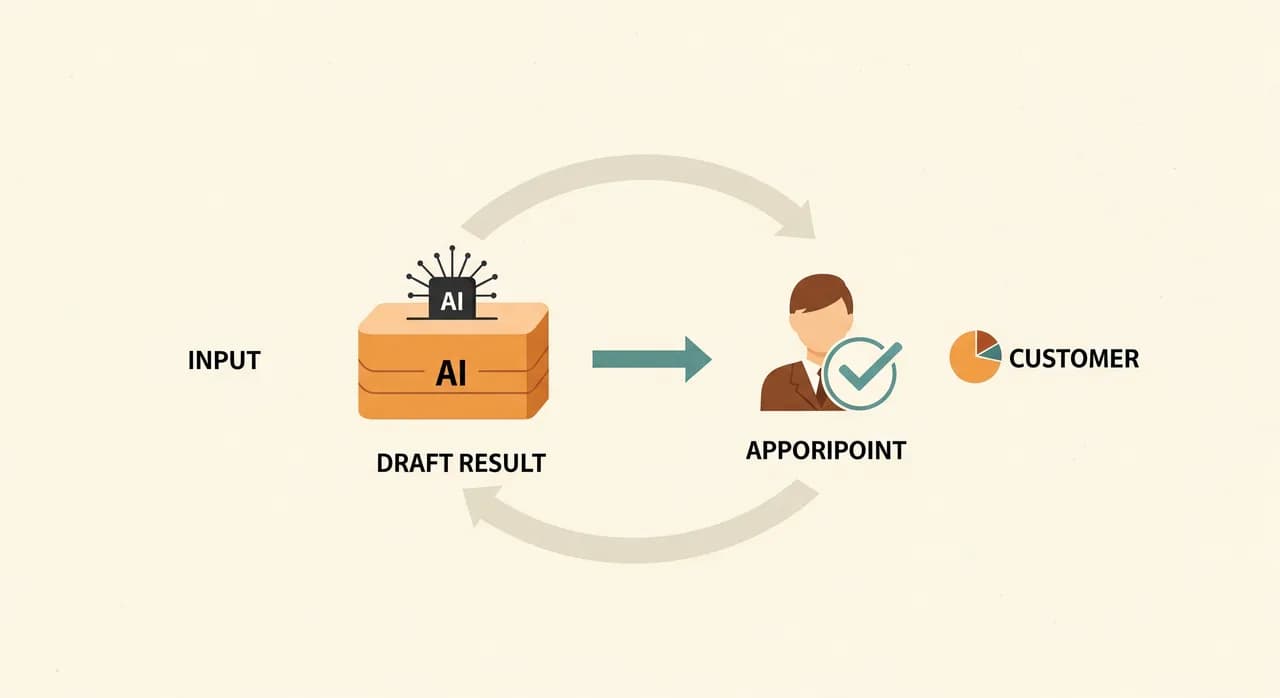
Done this way, the limitations stop being scary. They become a design guide. You'll find AI quietly removing hours of drudgery — the drafting, the sorting, the first-pass answers — while the parts that actually define your business stay exactly where they belong: with people who care about the outcome and are accountable for it.
Want an honest read on where AI fits your business?
We'll look at your actual workflows and tell you plainly which tasks AI is ready for, which still need a person, and which aren't worth automating at all — with no pressure to build anything.
Talk to us about AI, honestlyCommon questions
Will AI replace my employees?
Can I trust AI to answer customers directly?
Why does AI sometimes just make things up?
Should I wait for AI to get better before using it?
Where should a small business actually start with AI?

Have a nice day is a software studio that helps small and mid-sized businesses go digital — automation, AI and custom software that works in everyday operations, not just on slides.