What Does an AI Chatbot Actually Cost? An Honest Budget Breakdown for Small Businesses
Quotes for an AI chatbot swing from a free widget to a five-figure project, and both can be true. Here's how the money really breaks down — setup, running costs and the hidden line items nobody mentions until the invoice arrives.
 Have a nice day12 min read
Ask three vendors what an AI chatbot costs and you'll get three answers that don't even seem to describe the same thing. One says it's free. One says forty euros a month. One sends a proposal with a five-figure number and a Gantt chart. The maddening part is that none of them are lying. They're just quoting wildly different things and all calling it the same word. So before you sign anything, it helps to know what you're actually paying for — and where the real money hides.
I've sat on both sides of this. I've helped small businesses buy chatbots, and I've watched them get burned by quotes that looked cheap and weren't. The single most useful thing I can tell you is this: the sticker price is almost never the real price. A chatbot is not a product you buy once, like a coffee machine. It's a small piece of software that lives in the middle of your business and needs feeding. The cost is in the feeding, not the buying.
This piece is the breakdown I give people when they call and ask, half-hopeful, half-suspicious, “so what's this going to run me?” No magic number — because anyone who gives you one without asking a question is guessing. Instead, the honest shape of it: what you pay up front, what you pay every month, what nobody warns you about, and how to tell a fair quote from a bad one.
Why the quotes are so wildly different
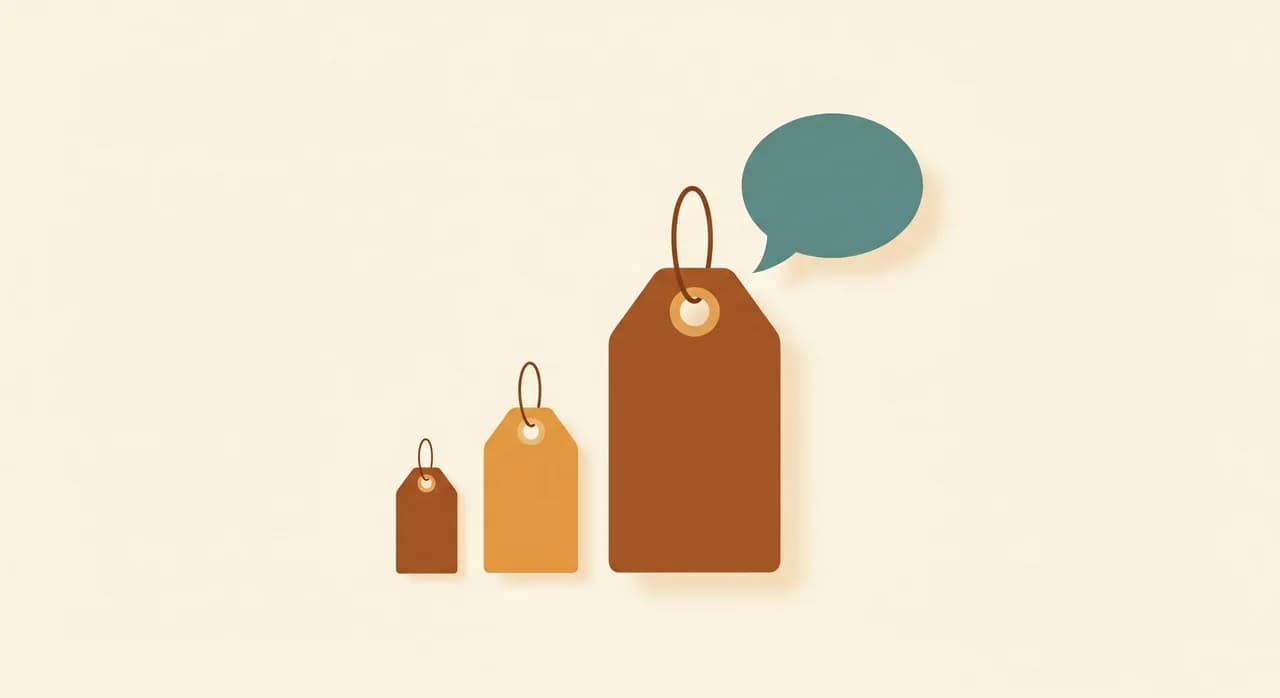
The reason a chatbot can cost nothing or cost as much as a small car is that the word covers at least three completely different things. Lumping them together is how people end up disappointed — they paid for one and expected another.
The cheapest version is a rule-based chatbot: a decision tree dressed up as a conversation. You click buttons, it shows pre-written answers. It doesn't understand anything; it just follows the branches you built. These are nearly free and genuinely useful for simple, fixed flows. The most expensive version is a custom AI assistant wired into your booking system, your inventory, your customer records — something that can actually do things, not just say things. In between sits the version most small businesses actually want: an AI chatbot trained on your own content that answers real questions in plain language and knows when to hand off to a human.
The setup cost: what you pay before it says a word
The first number is the one-off cost to get the thing built and live. With a free widget you can self-serve, this is essentially your own time. With anything serious, it's the bulk of where a partner's quote comes from — and it's worth understanding what's inside it, because this is where good and bad quotes diverge the most.
Setup is rarely about the AI itself. The clever language model is a commodity now; you rent it by the word. What you're really paying for is the unglamorous work around it: gathering your real answers, shaping them into something the bot can use, deciding what it should refuse to do, connecting it to wherever it needs to live, and testing it against the weird questions your actual customers ask. That last part is where amateur projects fall apart.
- Collecting and cleaning your content — FAQs, policies, product details, the answers currently living only in someone's head.
- Designing the conversation: tone, fallback behaviour, and the all-important hand-off to a human.
- Connecting it to your website, and sometimes to WhatsApp, Instagram or your inbox.
- Guardrails — telling it what it must never promise, price or invent.
- Testing against real, messy questions until it stops embarrassing you.
- A way for you to update answers later without calling anyone.
The running cost: what it costs to keep talking
This is the line that surprises people, because it never appears in the headline price. A chatbot has ongoing costs whether you build it yourself or hire someone, and they come in two flavours: the platform and the usage.
Platform and hosting
Most off-the-shelf chatbot tools charge a monthly subscription, often tiered by how many conversations you have or which features you switch on. It's predictable and usually modest at small-business volumes. The catch is the tiers: pricing that looks gentle at the bottom can jump sharply once you cross a conversation threshold or want the integration that actually matters to you. Read the tier above the one you're buying — that's the one you'll grow into.
AI usage
If the bot uses a real language model, every conversation costs a tiny amount in processing — fractions of a cent per exchange. At small-business volume this is genuinely small, often less than your coffee budget. But it scales with traffic, so a bot that goes viral or gets hammered by your busy season will cost more in the months it's busiest. That's a nice problem to have, but you should know it exists rather than meet it on a bill.
“Nobody is surprised by the setup quote. They're surprised three months later, by the running costs no one drew on the whiteboard.”
There's a third running cost that has nothing to do with software: maintenance. Your prices change. You add a product. A policy shifts. If nobody updates the bot, it starts confidently telling customers things that stopped being true. Either you keep it current yourself — cheap if the tool lets you, which it should — or you pay someone a small ongoing amount to do it. Budget for this from day one. A chatbot that's drifted six months out of date is worse than no chatbot at all.
Rough numbers, with all the honesty I can manage
You came here for figures, so here are some — with a loud caveat. These are illustrative ranges, not a quote, and they vary by country, complexity and how much of your content already exists in usable form. Treat them as a sense of scale, not a promise.
| Type | Setup (one-off) | Running (monthly) | Best for |
|---|---|---|---|
| Rule-based / button bot | Free to low | Free to small | Simple menus, basic FAQs |
| AI bot on your content | Low to mid | Small to moderate | Most small businesses |
| Connected AI assistant | Mid to high | Moderate | Booking, lookups, real actions |
| Fully custom build | High | Varies | Specific needs off-the-shelf can't meet |
Notice the shape rather than the words. As you move down the table, the setup cost climbs steeply but the monthly cost climbs gently. That's the key insight for budgeting: most of the money in a capable chatbot is the one-off build, not the running. Which means the worst financial outcome isn't paying too much up front — it's paying a fair amount up front for something that gets abandoned in month three. Then you've bought the whole setup cost and captured none of the value.
The costs nobody puts in the quote
Here's where I earn your trust by telling you the parts vendors skip. None of these are scams. They're just real costs that don't fit neatly on a proposal, so they get left off — and then they show up anyway.
The last one deserves a moment. A chatbot is a public face of your business. A cheap one that loops, misunderstands and traps people in a menu doesn't save you money — it quietly costs you customers who decide you're hard to deal with. That damage never appears on any invoice, which is exactly why it's the most expensive line of all. When you weigh a too-cheap quote, weigh that.
How to tell if it's worth it for you
Cost only means something next to value, so do the back-of-an-envelope sum before you shop. It's not complicated, and it'll tell you more than any vendor's pitch deck.
- 1Count the repeat questionsHow many times a week does your team answer the same handful of questions? Opening hours, prices, availability, ‘do you do X’. Be honest — it's usually more than you think.
- 2Put a number on the timeRoughly how many hours a week does that cost across everyone who answers them? Even a modest number adds up fast over a year.
- 3Estimate the missed onesHow many enquiries arrive after hours, or while you're busy, and quietly go elsewhere because no one replied in time? Those are sales, not just questions.
- 4Compare to the running costIf the monthly cost is less than the hours saved plus the enquiries rescued, the maths works. For most service and retail businesses with steady repeat questions, it works comfortably.
If you run that sum and the repeat-question pile is small, be brave enough to walk away — a chatbot won't pay for itself and you'll resent it. If the pile is large and a chunk of it lands outside your working hours, this is one of the clearest-cut automations a small business can make. The chatbot answers the boring 80% instantly, day or night, and hands the interesting 20% to a human who's no longer drowning in repetition.
How to read a quote without getting played
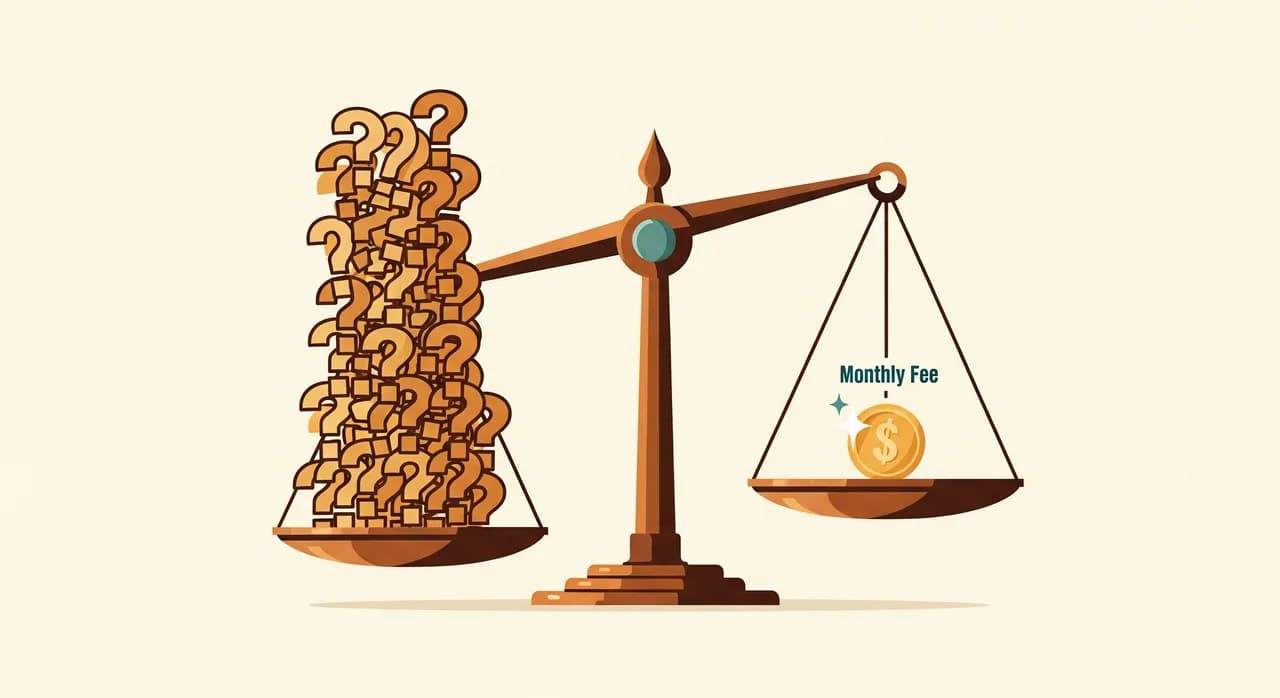
When the proposals land, you don't need to be technical to judge them. You need to ask a few plain questions and watch how comfortably they're answered. Squirming is information.
- “Which of the three types is this?” A clear answer means they understand what they're selling.
- “What's the total monthly cost at my expected volume — and at double it?” Good partners quote both without flinching.
- “What happens when my prices or info change — can I update it myself?” If the answer is ‘call us’, factor that in forever.
- “What does the bot do when it doesn't know?” The right answer is a graceful hand-off to a human, not a confident guess.
- “Can I see it fail?” Ask to watch it handle an off-script question. How it behaves at the edges tells you more than any demo of the happy path.
A fair quote is itemised, names its running costs out loud, and leaves you able to maintain the thing yourself. A bad one is a single big number with no breakdown, vague about the monthly side, and quietly designed so you can never change anything without coming back to them. You don't need to be an expert to feel the difference — you just need to ask, and listen.
Want a straight answer for your situation?
We'll look at the questions your customers actually ask, tell you which type of chatbot fits, and give you an honest range — not a mystery number. No obligation to build anything.
See how we approach AI chatbotsCommon questions
How much does an AI chatbot cost for a small business?
Are there ongoing monthly costs, or just a one-off?
Is a free chatbot good enough?
What's the most expensive part of a chatbot?
How do I know if it's worth it?

Have a nice day is a software studio that helps small and mid-sized businesses go digital — automation, AI and custom software that works in everyday operations, not just on slides.